Tunis, the capital of Tunisia, is an absolute treasure for tourists who love history, art, scenery, and want to soak a bit in the sun during the cold, gloomy months of European autumn and winter.


I was really surprised by how much we loved this place, and we would totally return there one day. See my selection of what to see in Tunis and around it-and stay tuned for more recommendations on what to see nearby!


Important: Beware that the traffic can get wild in Tunis, and always allow a bit of extra time to move around.


1. Byrsa Hill and Carthage Citadel
The city of Carthage-according to legend-was founded by Queen Dido (also known as Elyssa) after Aeneas – the Trojan War warrior, the main character of Virgil’s Aeneid, and an ancestor of Romulus and Remus – left her here.


Carthage was the center of one of the mightiest empires in the world, and it’s no surprise they had a clash with the Roman Empire. Of course you know the famous quote of Cato the Elder: “Carthage must be destroyed” – Carthago delenda est. Three Punic Wars took place from 264 to 146 BC, and they resulted in Carthage being destroyed to pieces.


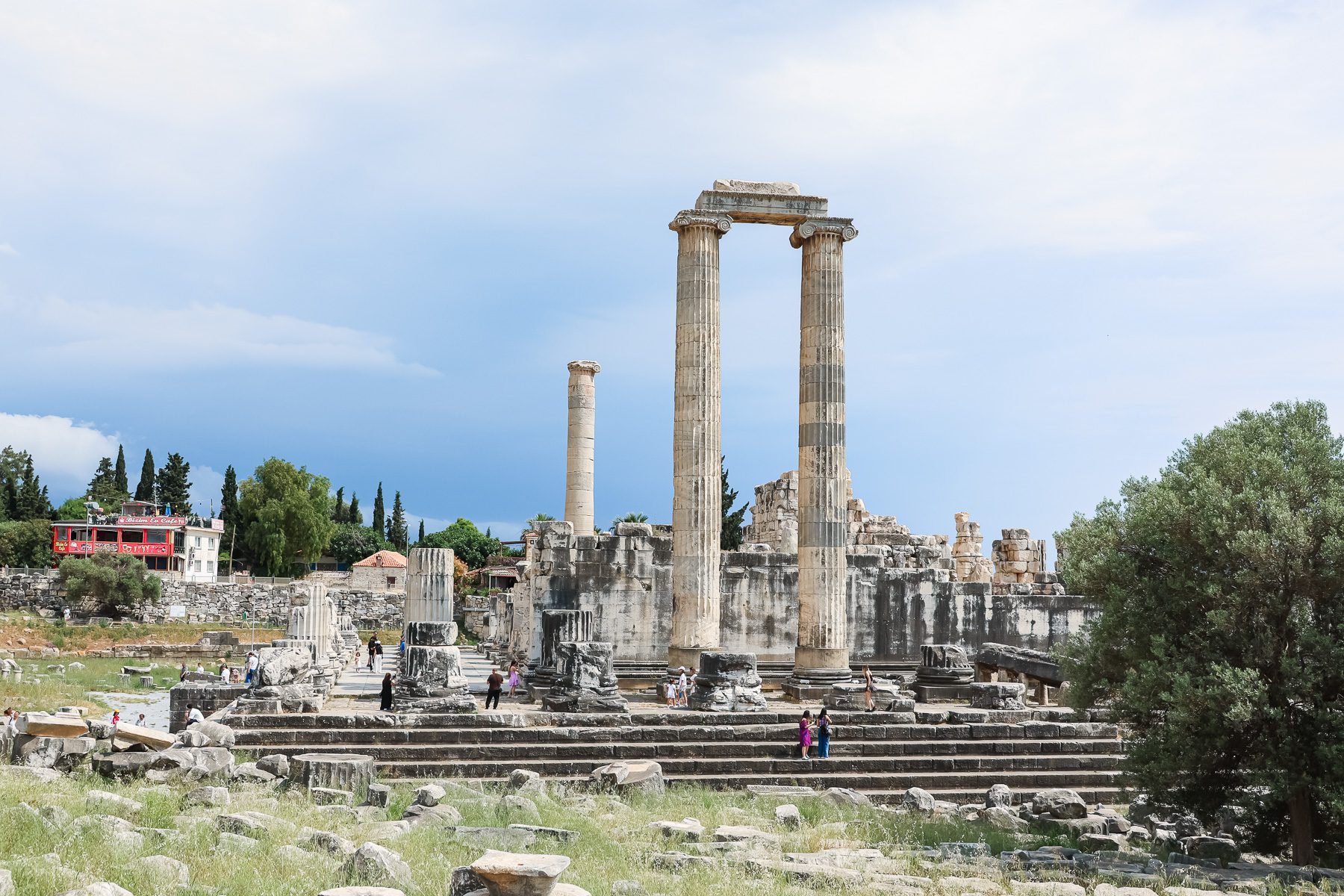
Although I’ve traveled through all of Italy (I think I visited at least 50 Italian cities and small towns in total), it’s still thrilling to visit such a spot. The Byrsa Hill is the site of the Punic citadel overlooking the city of Carthage and its port, destroyed by Romans in 146 BC.


Only recently the so-called Hannibal quarter, or the Punic quarter, was excavated. It’s called after famous Carthagene military leader Hannibal Barca and in reality was a residential area of the citadel.

The majority of artifacts and ruins within the excavated area belong to Romans who founded their own city on the ruins of Carthage.


Important info first: the Carthage National Museum sitting on Byrsa Hill is currently completely shut down due to restoration. You can visit only the archaeological sites around it.


2.French built Saint Louis Cathedral
This place also has an imprint of French history. King Louis IX, later known as Saint Louis, was the king of France from 1226 to 1270 and was famous for his crusades.

He died here from a disease on 25 August 1270, near Tunis, and his remains were later transferred back to France. On this site on Byrsa Hill, in the late 19th century, the French built Saint Louis Cathedral, or Cathédrale Saint-Louis de Carthage.


Now it’s known as Acropolium and no longer operates as a church, but you can still visit it.


3.Baths of Antoninus
The Baths of Antoninus is one of the largest baths-or thermae-built in the whole Roman Empire, and now its ruins are one of the main sights of Tunis, the capital of Tunisia.


This bathing complex dates to the mid-second century BC, right after the Romans destroyed Carthage and started building their own city here; after that, the thermae were used for several centuries.


You can walk right through the rooms that used to be the hot room, the cold room, the gymnasium, the palestra, the vestibule, and so on. This complex was so grand that it really impresses even now!


There are also a few remnants of Roman presence here that you can explore while walking towards the bathing complex. Don’t miss the mosaics there. Btw, the presidential palace is located nearby as well!


4.Roman Theatre of Carthage
This restored Roman Theatre of Carthage is another site you might pop in to visit.


Located within the hill, it dates to the 2nd century AD and still houses various events! As you can see, the stage there is modern.


5…and Other Roman Ruins
If you wish, you can also stop by to explore more of the Roman ruins in the Carthage area. One of them is the amphitheater, but the site looks much less impressive at the moment than the theatre.

The Roman aqueduct (the last stretch of it, not that high compared to the beginning and part of the longest aqueduct system in the world) and the cisterns are worth a visit too; you can just ask your driver to stop by. There are also more minor, partly excavated sites such as villas and colonnaded houses.


6.Oceanographic Museum of Carthage
The Oceanographic Museum of Carthage, which celebrated its 100th anniversary in 2024, is partly a museum and partly an aquarium.


Come here to see some marine species, like fish and crustaceans living in the tanks (but I cannot promise this will be the best aquarium you’ve visited), to learn about the local species and about the scientific research done here-which is really interesting.


7.Ports of Carthage
You won’t believe this, but the Oceanographic Museum is also located in the historical area! It sits right next to the historical ports of Carthage, and you can see both together.


Back in time, the port of Carthage used to have two parts. One-rectangular-port was used for trade ships, and the second-round-one was used by military ships. Both of them were concealed by a tall wall from the seaside, so the enemies couldn’t see what was going on behind the wall. Now the ports don’t look that impressive as they are basically ponds with grass growing on the shores, but both keep their geometrical shape.


8.Bardo National Museum
Looking for more Carthaginian and Roman heritage? The National Museum of Bardo is a must-visit for history lovers (you can have a glimpse of the most outstanding pieces of their collection here).


Together with the National Carthage Museum, these are the two main venues for the antique artifacts found here.


The Bardo Museum specializes in mosaics. It was established in 1888 and is one of the most important museums in the whole Mediterranean! Its collection is breathtaking!


Sadly, the 2nd floor and some other rooms are closed, but there are enough exhibits for you to explore anyway.


Most of the mosaics date to the Roman and Carthaginian periods, and you can also explore many other artifacts, including stage masks, lamps, and so on, getting into this antique era as well.


Besides that, there are astonishing rooms that belonged to the Medina palace built by Hussein II Bey the 19th century and feature amazing ceilings, decorations, lanterns, tiles, and so on. The inner court in the historical palace part is worth a visit as well.


9.Avenue Habib-Bourguiba
Next, let’s explore the main historical sight of Tunis itself – the capital of Tunisia, a UNESCO site and a large porte, is worth your visit too!


The Avenue Habib-Bourguiba, named after the first President of Tunisia, is the main boulevard of Tunis. It has witnessed many political historical events, and now it’s a nice walkable area with monuments, fountains lined by trees, and shops.


You can spot some landmarks here: the Cathedral of St. Vincent de Paul, the Ibn Khaldun statue (he was an ancient philosopher and scholar), and the French Embassy overlooking the Place de l’Indépendance; the Municipal Theatre built in art deco style; the 38-meter-high Tunis Clock Tower; and the El Mouradi Africa Hotel, the only proper skyscraper here.


10.Bab el Bhar
Bab el Bhar stands at the end of Avenue Habib-Bourguiba and separates it from the Medina, the old city of Tunis. It sits in a lovely stretch of the square with fountains and luxuries buildings by its sides.


Originally, the gate on this site was constructed during the rule of the Aghlabid dynasty in the 10th century, but it was modified numerous times and even destroyed in the mid-19th century – but thankfully it was rebuilt later. The most gorgeous building facing it is a former British embassy now turned into the Royal Victoria Hotel.


11.Medina of Tunis
The Medina of Tunis, founded in the 7th century, is a UNESCO heritage site.


Starting from the 12th century, under the rule of the Almohad and Hafsid dynasties, Tunis was one of the busiest and wealthiest cities in the world, and you can still stroll around these streets of the ancient market here. This area is really huge and consists of numerous streets, souks, monuments, and palaces (some of them you can visit if you have time).


12.Ezzitouna Mosque
Ezzitouna Mosque is the main landmark of old Tunis. Ezzitouna Mosque was founded in the 7th century, right after Islam was brought to Africa, and reconstructed in the 9th century; now it’s a national monument.


The famous Ezzitouna University, one of the oldest educational institutions in the world, is based here too. If you can peek inside, you’ll notice that all the columns inside are different! They were brought here from various Roman sites, including Carthage, and reused.


13.Sidi Bou Said
Finally, visit Sidi Bou Said, a famous white-and-blue city located close to Tunis.


I fell in love with this city; it’s so pretty!


Sidi Bou Said is now actually named after Sidi Bou Said (full name is Abu Said ibn Khalef ibn Yahia Al-Tamimi Al-Baji), an Islamic holy man, scholar, and teacher to other important figures. He stayed in this area in the 12th century. The first name of the city is Jbel el-Menar, though.


The city has been painted white and blue for over a century; this color palette was proposed by Rodolphe François, Baron d’Erlanger, a French artist who specialized in music studies and lived here.


If you wish, you can explore his house turned into a museum here too. Now everyone comes here to take photos with the blue doors in the very aesthetically pleasing environment.


The natural views are absolutely breathtaking, with turquoise blue water and high mountains on the horizon strikingly contrasting with the white houses of the city.


There are lots of souvenir shops with ceramics, paintings, carpets, traditional pots, and glasses, and so on. And you probably know that I’m a big fan of desert roses from my Qatari trips – do you think I bought one from the Sahara too?


14.Dar El-Annabi Museum in Sidi Bou Said
You can also pat a visit to the Dar El-Annabi Museum in Sidi Bou Said, a real house with furniture and daily life objects untouched to give you a glimpse of how people lived here in the past. You can explore this place very quickly or spend some time exploring the exhibits and taking photos!


Apart from the several photogenic spots to take photos, you’ll get the insights into how the house of a wealthy man looked like, as this mansion dates back to the 18th century.


The cherry on top is that they have a magnificent rooftop terrace from where you can observe all the city without crowds.


15. Four Seasons Tunis
We stayed in simply the best hotel in Tunisia (yes, the whole country!), the Four Seasons Tunis – and it was of the best-looking hotels during our trips around Africa, and the service is of the highest level.


There are a few restaurants here, a kids’ club, a spa with a gorgeous indoor pool, and beach access. I’m not sure you can swim with kids there but shell collecting and enjoying the beach strolls are the must!


We got the most magnificent room overlooking the ocean – scroll below to see what a fantastic view we had from our terrace!


The breakfast selection was also great, with local, Western, and even a bit of Asian dishes, not to mention the crepe/waffle station.


We had some other gastronomic experiences there, such as lunches at Alyssa, lunch and dining and Azur and by the pool at the Blue Restaurant, and dining at the Creek Bistro Chic restaurant-they have a great selection of Italy and France-inspired dishes.


Did you know that mint tea with pine nuts is one of the most traditional drinks in Tunisia? You can try it here as well, served absolutely beautifully!


Finally, I’d highly recommend you to try the spa treatments there: for instance, I went for a hammam experience (it takes place in a gorgeous marbled courtyard and includes black soap and loofah cleaning, scrub, and face and body mud masks) and a massage.


Read more blogs about Africa!
Hope you liked my blog,
Yours,
Anna xxx