Bahrain might be less known than its bigger neighbours from the Gulf such as UAE or Saudi Arabia, but this tiny country has its own charm and a set of landmarks to explore!



I’ve already prepared a few more targeted guides to Bahrain but now let me combine my experience of three trips there and show you the ultimate guide to this country: basically all its main landmarks are mentioned here!
1. Tree of Life
The Tree of Life, which is actually Prosopis juliflora, is a unique 400-year-old tree standing tall in the middle of a desert and oil extraction site – with some birds even nesting there. It looks like a miracle indeed!


Some say that this is the last tree of the Garden of Eden, while others believe it is linked to the Dilmun civilization, which is over 4,000 years old… but, of course, the tree is much younger.


However, the Tree of Life is still a magnet for tourists, although it’s quite far from Manama (about a 40-minute drive), many call it an unmissable spot of Bahrain!


2. Bahrain international circuit
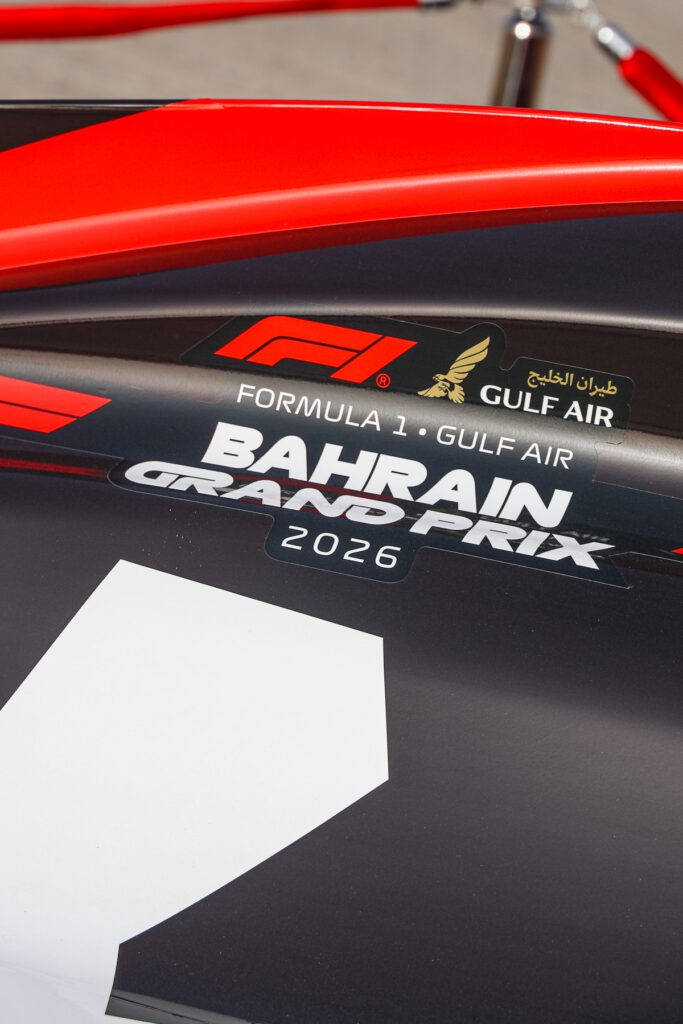
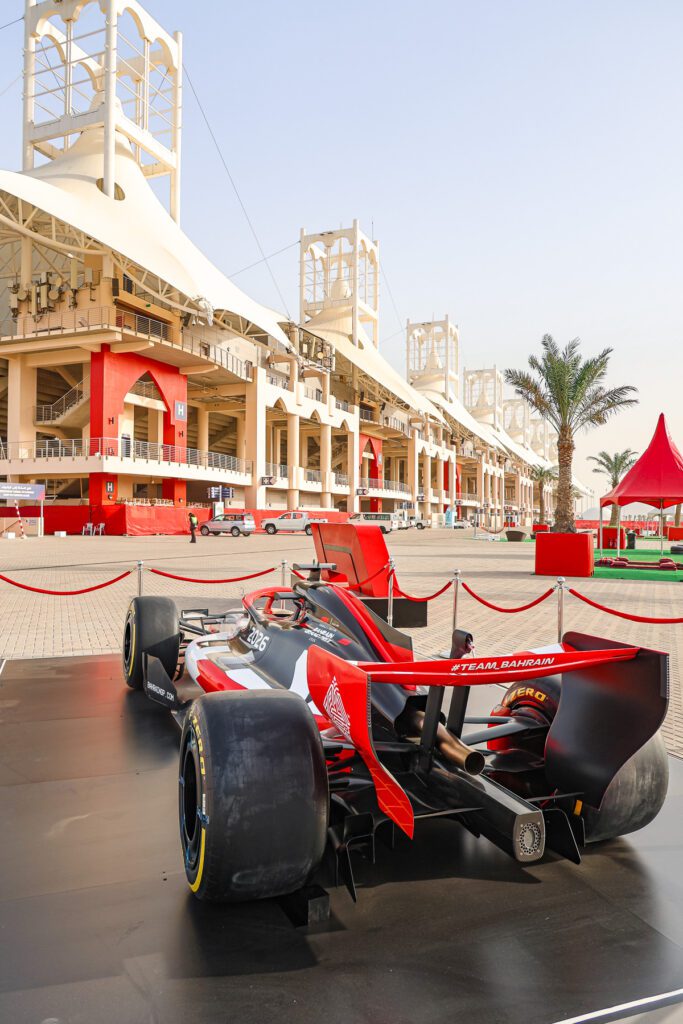
The Bahrain international circuit was opened in 2004 and is used for the Formula One Bahrain Grand Prix that takes place every year. It’s a massive event annually attracting numerous visitors!
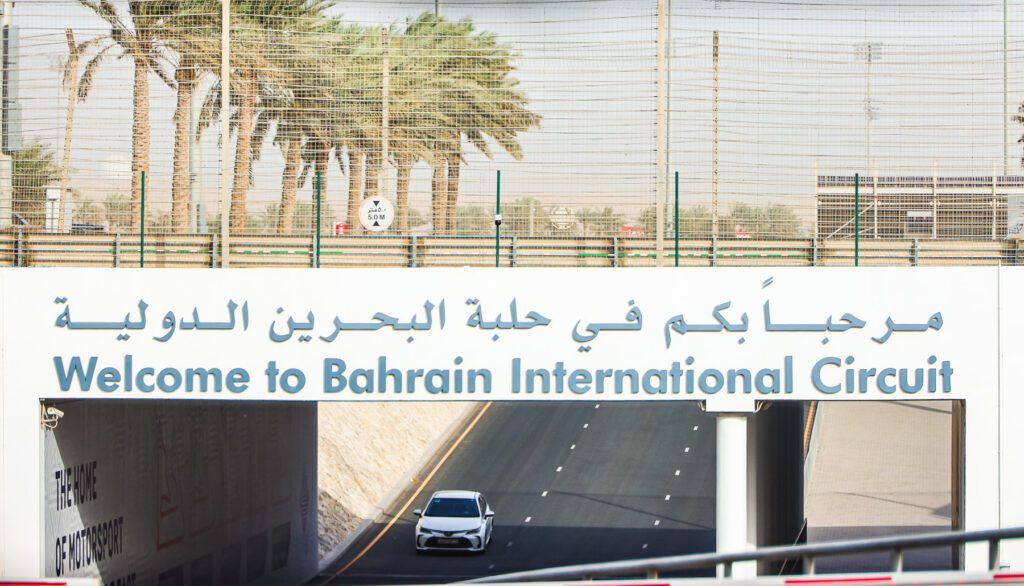

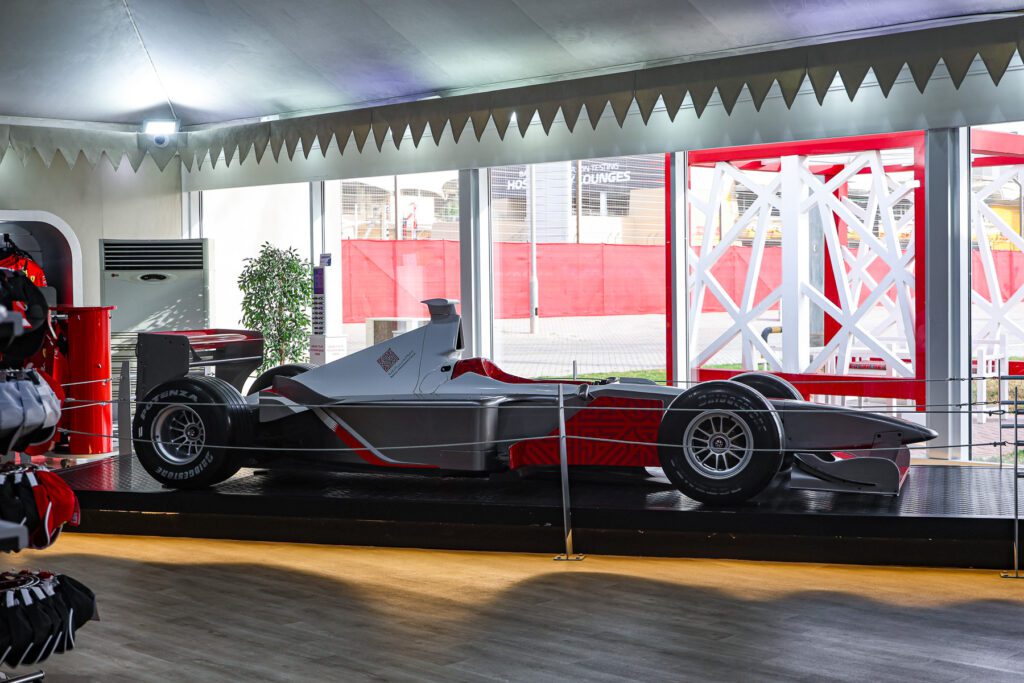

On some days this area is open out of racing schedule as well, and you can explore it all during a tour: a bit of the track, the Sakhir tower, the control centre, and the welcome centre.


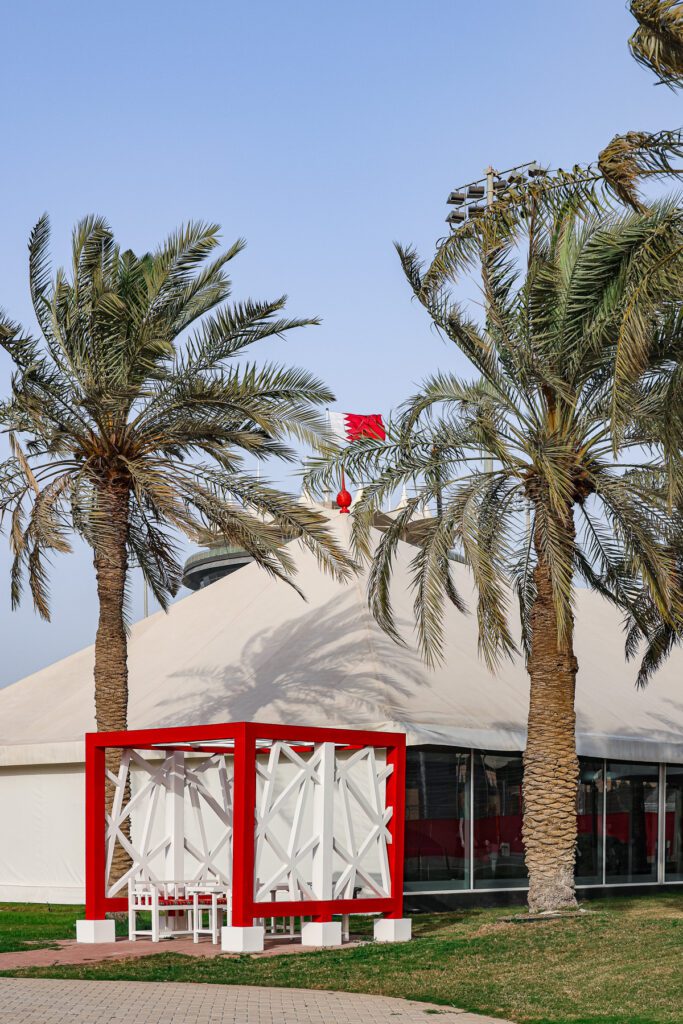
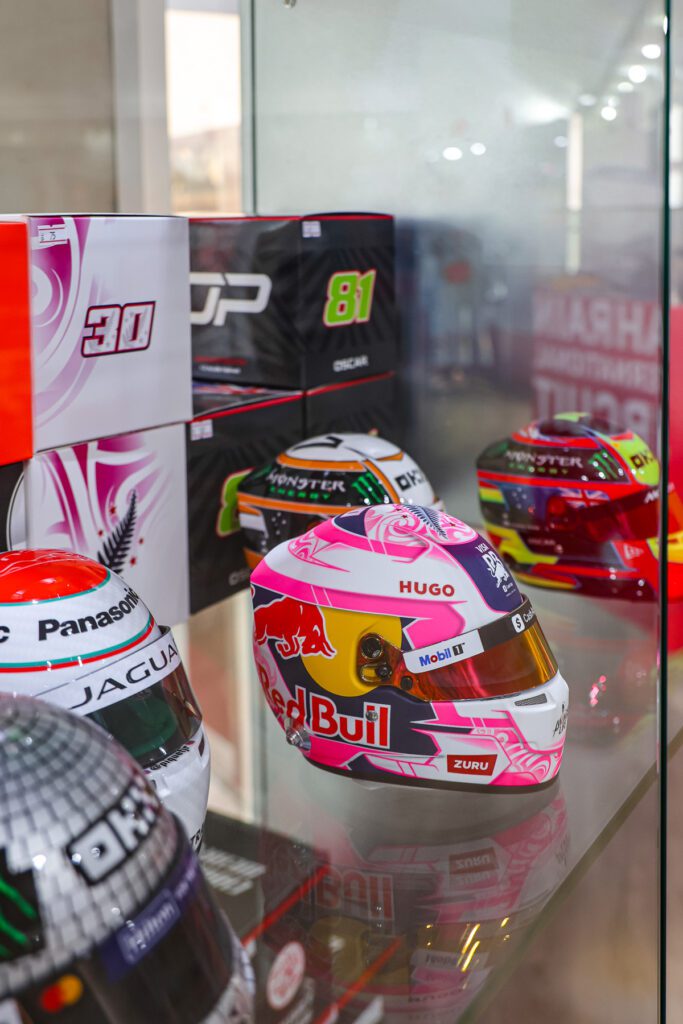


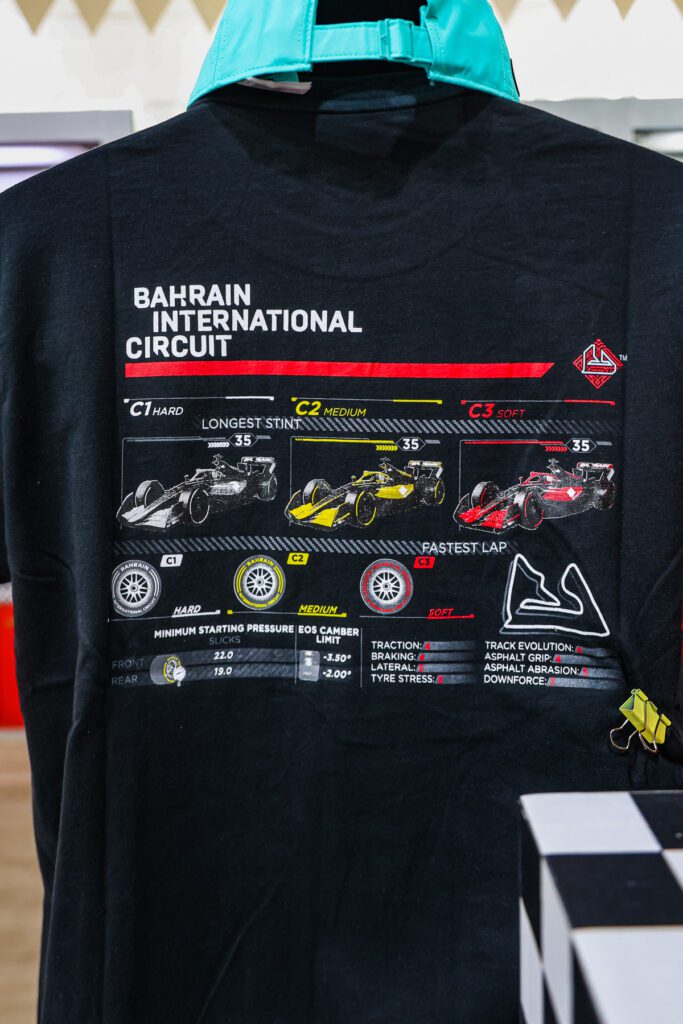
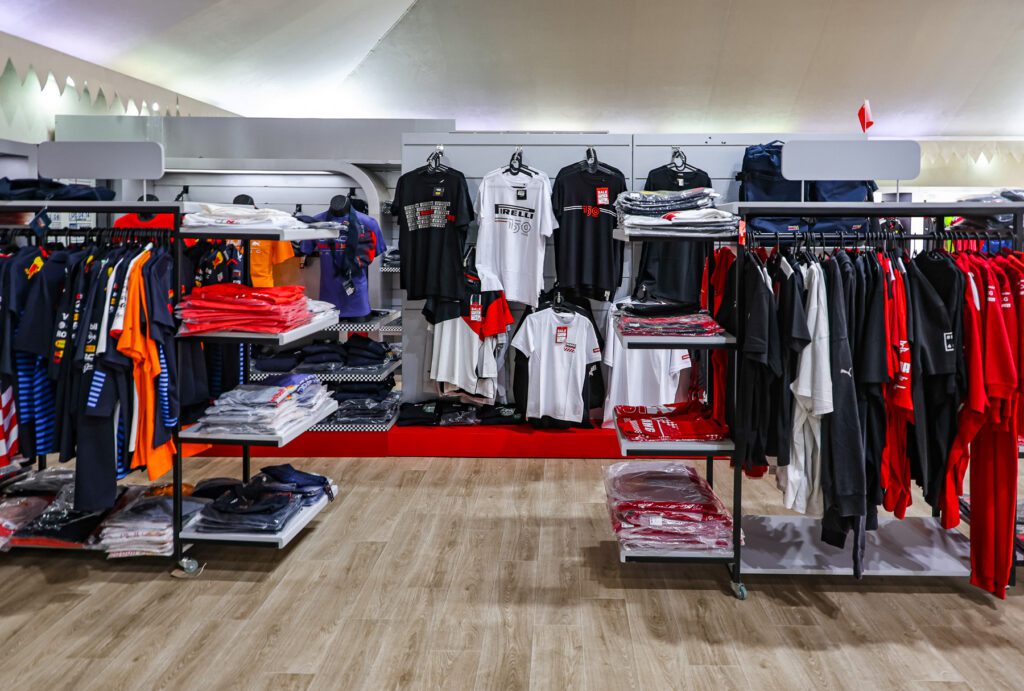
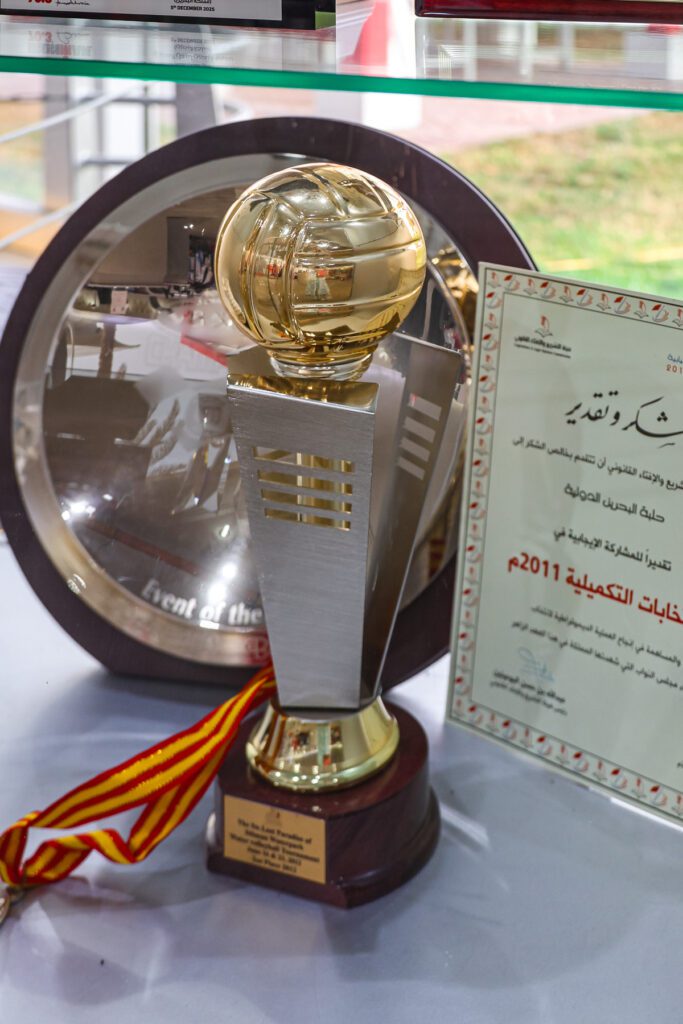
Unfortunately, during our visit only the gift shop and a small area around it was available for visitors, so we ended up just buying a tiny racing car for George.


3. Bab Al Bahrain and Manama Souq
Bab Al Bahrain is an impressive gate marking the entrance to the Manama souq. Its construction was promoted in 1949 by Sir Charles Belgrave, British advisor to the Royal rulers of Bahrain from 1926 until 1957, to be erected in 1949 on the site where traditional large dhow boats docked at a pier by the market.


Don’t be confused: as you probably know, a big part of Manama is artificially created land which used to be covered with water, and now the waterfront is pushed forward.


Manama Souq is a must for every Bahrain visitor! Come to the large covered part of it or get lost in the alleys of shops selling gold, souvenirs, carpets, spices, it’s up to you. Yes, the sellers might be a bit pushy and you have to bargain, but that’s what makes this souq authentic.


By the way, you can also find an operating synagogue and a Hindu temple in this part of the city!


The postal museum is located close to the souq entrance (see below).
4. Al-Fateh Grand Mosque
The Al-Fateh Mosque was founded in 1983 and opened in 1988 and named after Sheikh Ahmed Bin Muhammad Bin Khalifa, called ‘Al Fatih’ (it means the conqueror), the founder of modern Bahrain. As you can clearly see, it’s huge: it’s one of the largest mosques of the world.


You can visit it only with a guide from a mosque (for instance, we waited for about 20 min to be assigned with one), but it’s worth the wait. It looks pretty grand on the inside with materials brought from all over the world: Austria, Italy, Scotland..


The mosque is a part of the Islamic Centre, and there’s a national library located there too.


5. Qal’at al-Bahrain
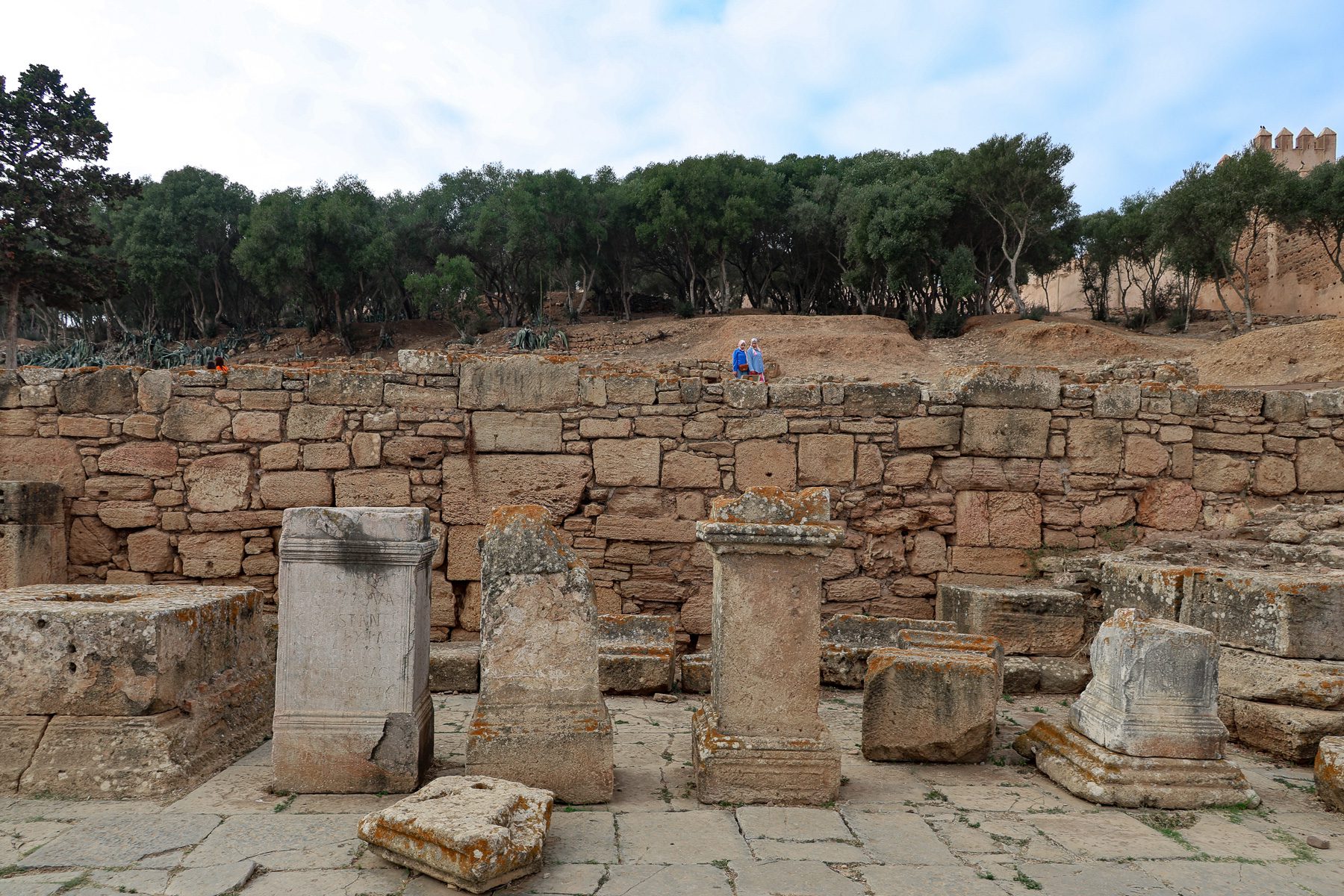
Start exploring Bahrein with Bahrain fort, or Qal’at al-Bahrain, a UNESCO World Heritage Site since 2005! In the past this site was the main city of Dilmun civilization, one of the earliest ones in this area, known for its commercial connections with Mesopotamia, China and the Mediterranean.


The archaeological excavations made in the middle of the 20th century revealed the remains of cultures as old as 5000 years! The first fort on the site was built around 2300 BC, but the current fortress was constructed by the Portuguese in the 16th century.


Come to the Fort Museum too; it’s not very big but very modern and represents the history of the fort since early Dilmun period through the times of Alexander the Great and early Islam period till the Portuguese rule.


Unfortunately, you cannot enter the fort now as it’s closed for some works but we were told it’ll reopen in two years. Don’t miss the cafe and the shop after visiting the museum!


6. Pearling path in Muharraq
Muharraq is the third largest city of Bahrain and was the capital of the country till 1932.


The Pearling path is an itinerary in the historic part of Muharraq – the path is marked with lampposts shaped as pearls!


Pearling Path has been the UNESCO World Heritage site since 2012, and includes a number of restored historical buildings in Muharraq. Let me show you some of the landmarks there!


The Qal’at Bu Mahir is the very beginning of the Pearling path. It was founded by the Portuguese but the current fortification dates to 1840. It dominated the surrounding and protected the Muharraq. Later in 1868 it was partly destroyed by the British (it used to have four towers and mighty walls).


Other important sights of the Pearling path are the following. Al Ghus House, or the pearl diver house where you can learn how hard was this occupation; the Nukhidhah House, or the boat captain house; and a few Art galleries.


Siyadi House, Siyadi Majlis, and Siyadi Mosque, all belonged to the prosperous pearl merchants. Come here to see the amazing interiors and the fantastic exhibition on Bahraini pearls including the insight into pearl classification – for instance, Jiwan pearl is considered the purest and the most perfect one! – and Cartier masterpieces that included local pearls.


Many of those buildings were erected in the first part of the 20th century and marvelously reconstructed.


7. Beit Al Quran
One of the main sites for Bahraini is Beit Al Quran, or the House of Quran.


The entire building was erected specifically to house a large collection of Qurans, and from the outside, it’s engraved with Arabic script. It features a majestic inner courtyard, a mosque, a religious school, and an auditorium.


The collection of Qurans consists of over 50,000 items; however, you can see much fewer on display. The exhibits are truly rare!


Some date to the very beginning of Islam, while others are intricately decorated. Some have verses written on grains of rice, and lastly, there are early editions in English and French!


8. House of Basket weaving
Did you know that in the past Bahrain was a country of million palm trees? And House of basket weaving is a small artisan museum located right to the side of the Qalaat fort paying tribute to this ancient craft.


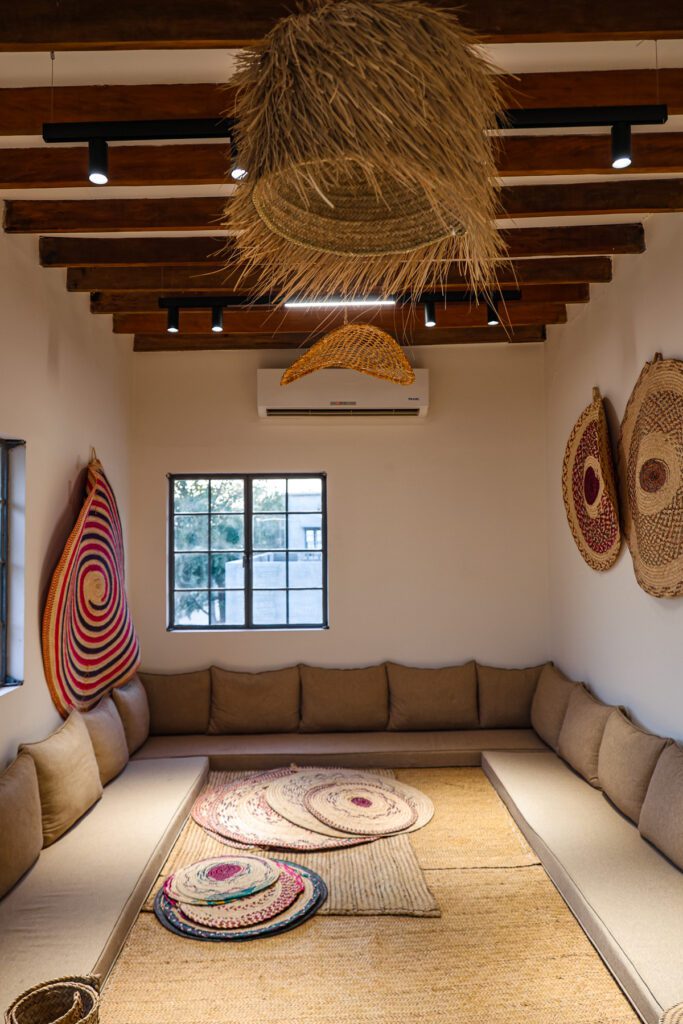

Here you can explore how local craftsman create baskets, bags, hats, tableware, and so on out of palm tree leaves. Local name for this craft is Saff-al khoos, and to highlight the importance of it, Bahrain even applied to nominate “The Date Palm: Knowledge, Skills, Traditions and Practices” for the UNESCO Representative List of the Intangible Cultural Heritage of Humanity.

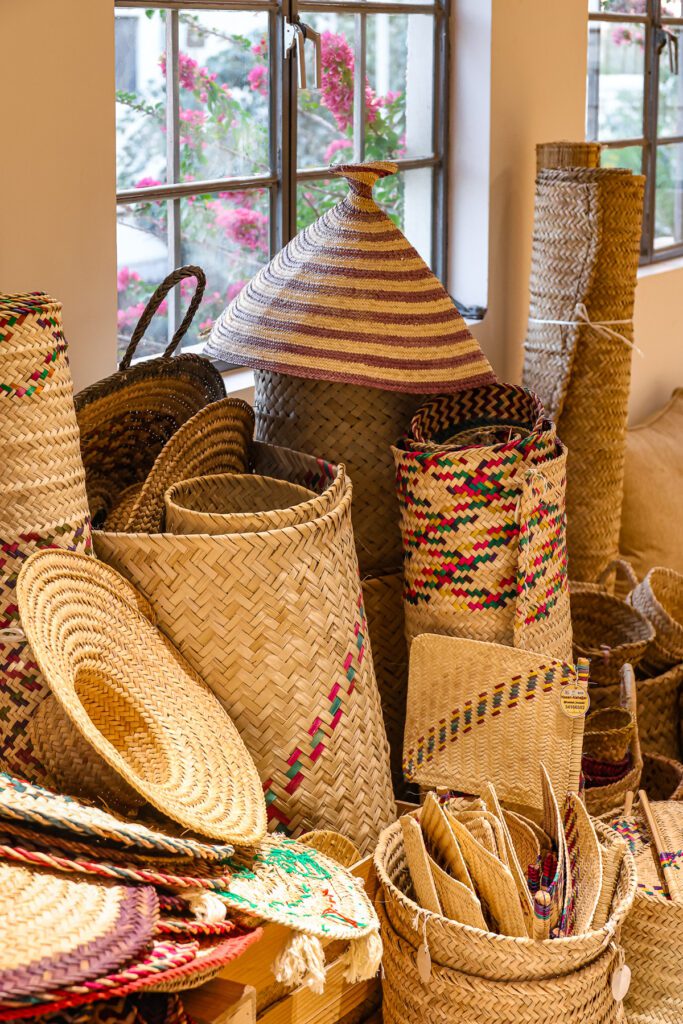


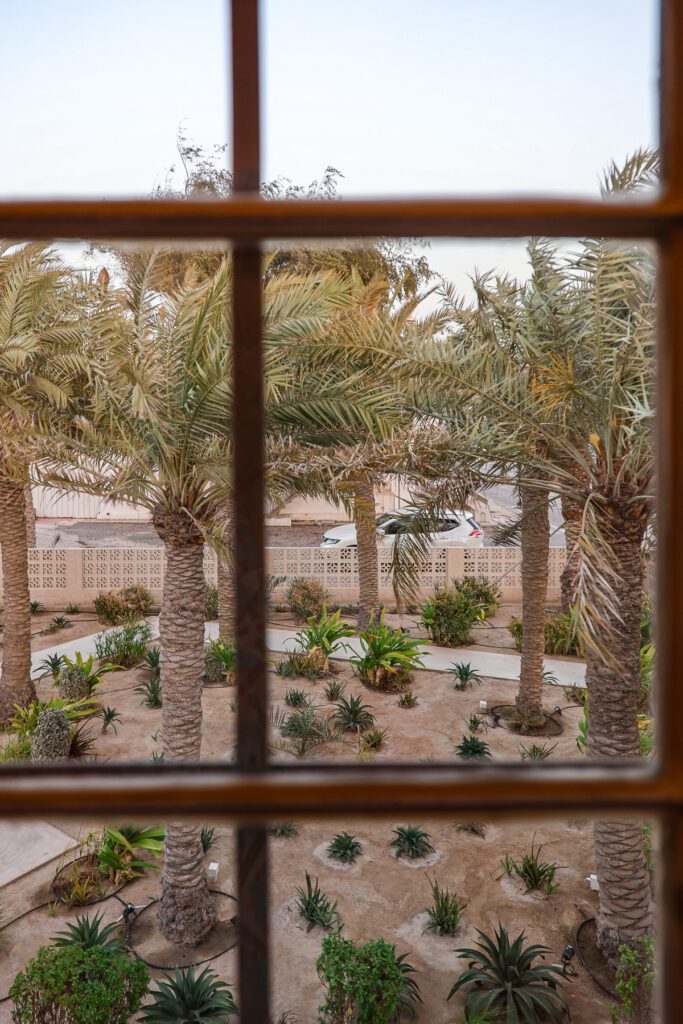

This centre is quite small, but sometimes it holds live master classes and presentations of palm fronds weaving.
9. Bahrain Financial district
BFH, or Bahrain Financial district, built on reclaimed land has a fantastic waterfront with many attractions.


There are restaurants, bridges, sculptures, green gardens, and a number of prominent buildings worth seeing in the dimmed light such as the large Four season hotel and Arcapita cubic mosque.


I’d suggest you take a boat at the Avenues mall in the evening at the waterfront to spend marvellous 15 minutes exploring the Financial district from the water!


10. Bahrain National Museum
The Bahrain National Museum is the largest museum in the country and was opened in 1988 (and now it seems that a grand redevelopment of the area around it is coming!).


It’s located in a large building with a sculpture garden at the entrance, and collection is spread throughout the following sections: the Hall of Graves, the ancient Dilmun civilization archaeological research, the Customs and traditions, the Tylos and Islamic periods, and the Manuscripts.


If you love museums, try visiting Beit Al Quran too.
11. The Avenues
One of your stops in Manama should be the Avenues, a shopping mall along the Bahrain bay. It might remind you of the Avenues in Kuwait, and you won’t be mistaken: it’s a little sister to that huge mall!


The first part of it opened in 2017, and the second is due to open this year. Its a large alley with shops and cafes on both sides, and it’s a really nice place to be whether you’re up to some Sephora skincare, Starbucks or EL&N coffee, cinema or local perfumes or sweets!


The Avenues mall has been extended since our last visit – now it’s really huge! But still smaller than the one in Kuwait.


12. Riffa Fort
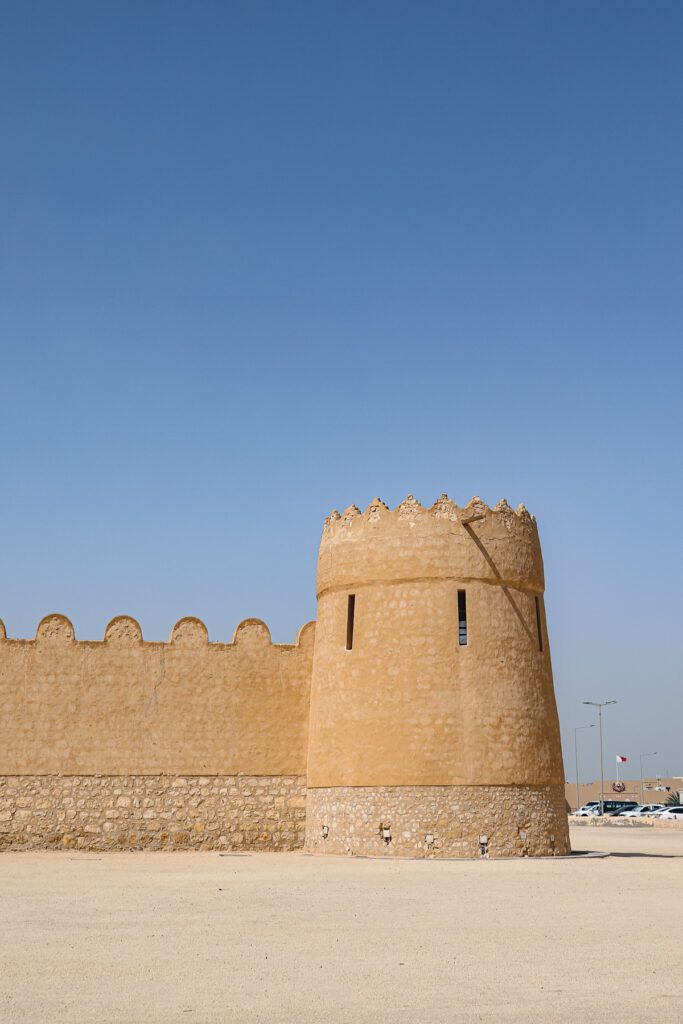
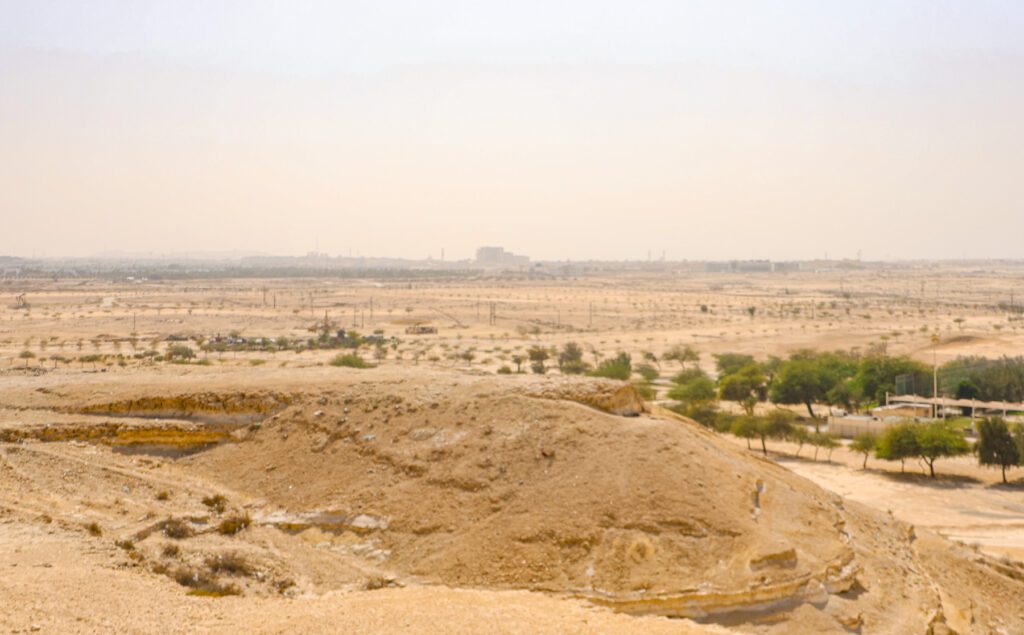
Riffa fort named after Riffa area where it is located, famous for its desert view point.


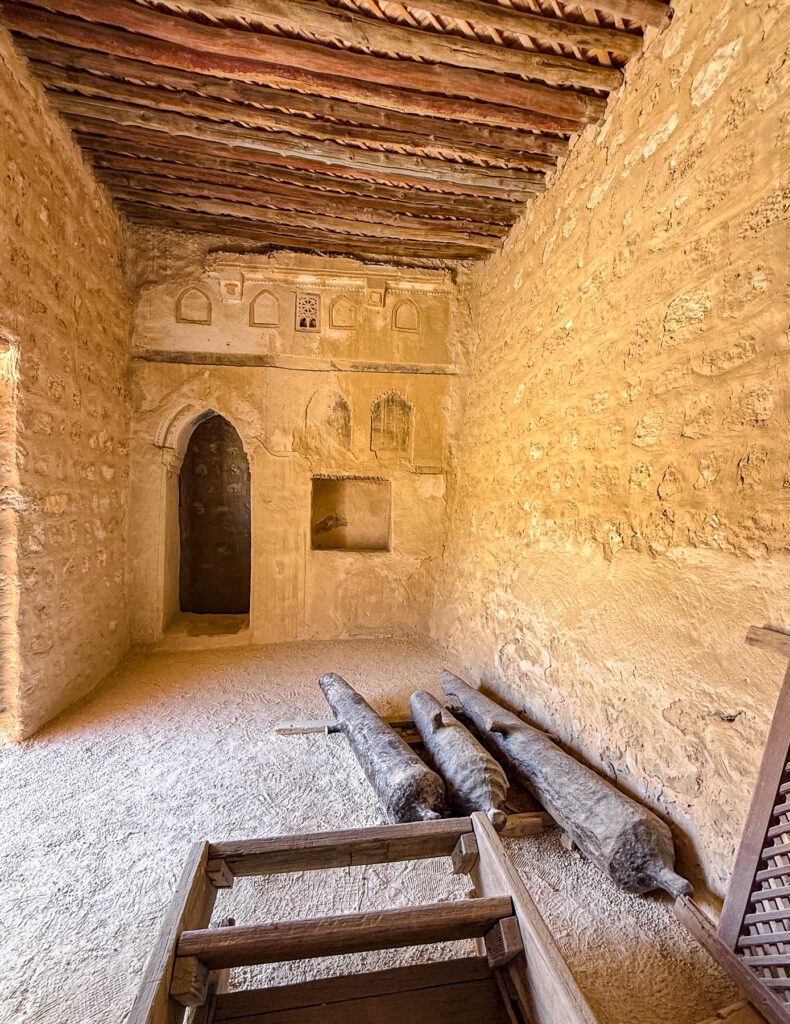


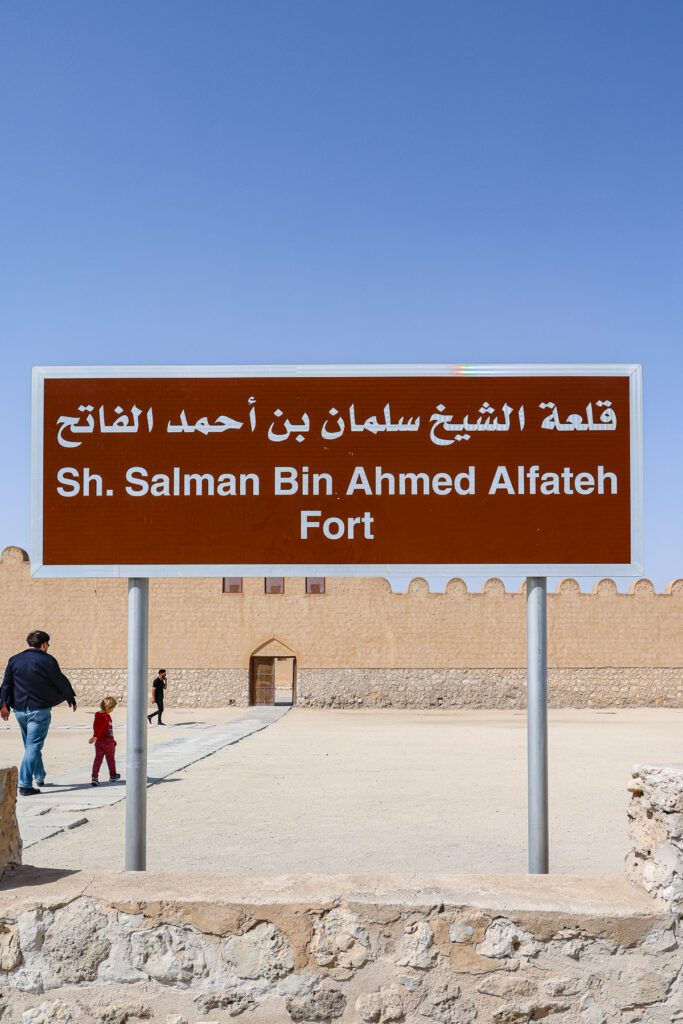
Also nicknamed after its founder, Sheikh Salman bin Ahmed, it is one of the main fortifications in Bahrain but it’s much less known as the Qalaat (or Bahrain) fort. It was built in 1812 and used to be the main residence of the Al-Khalifa royal family.



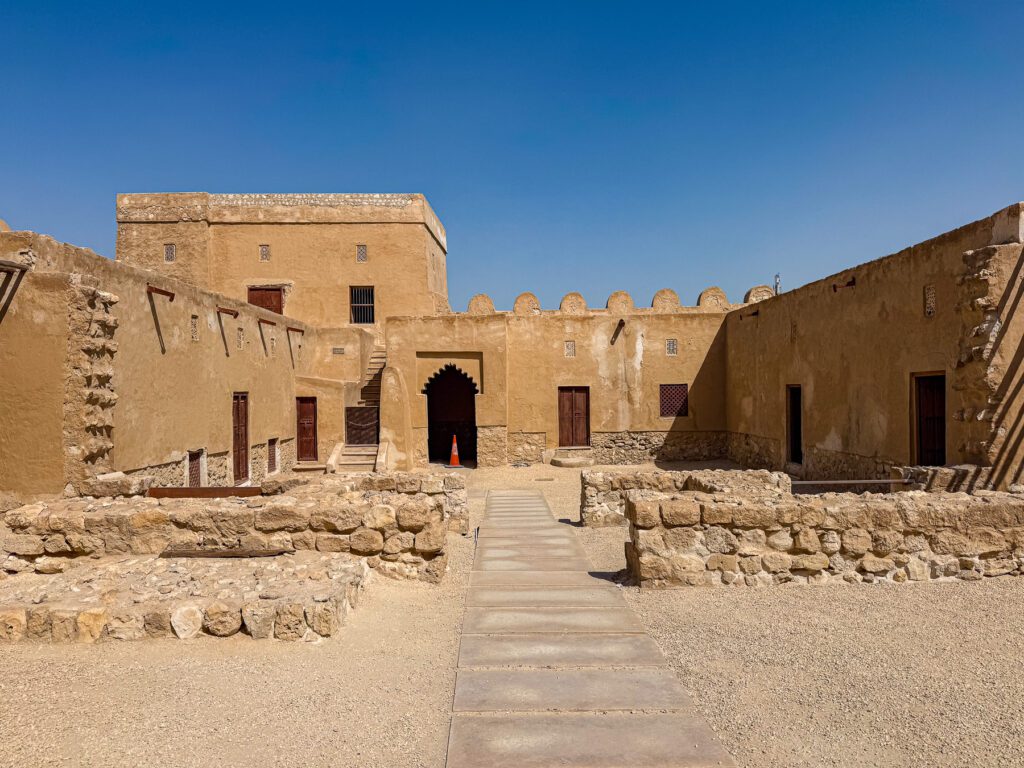
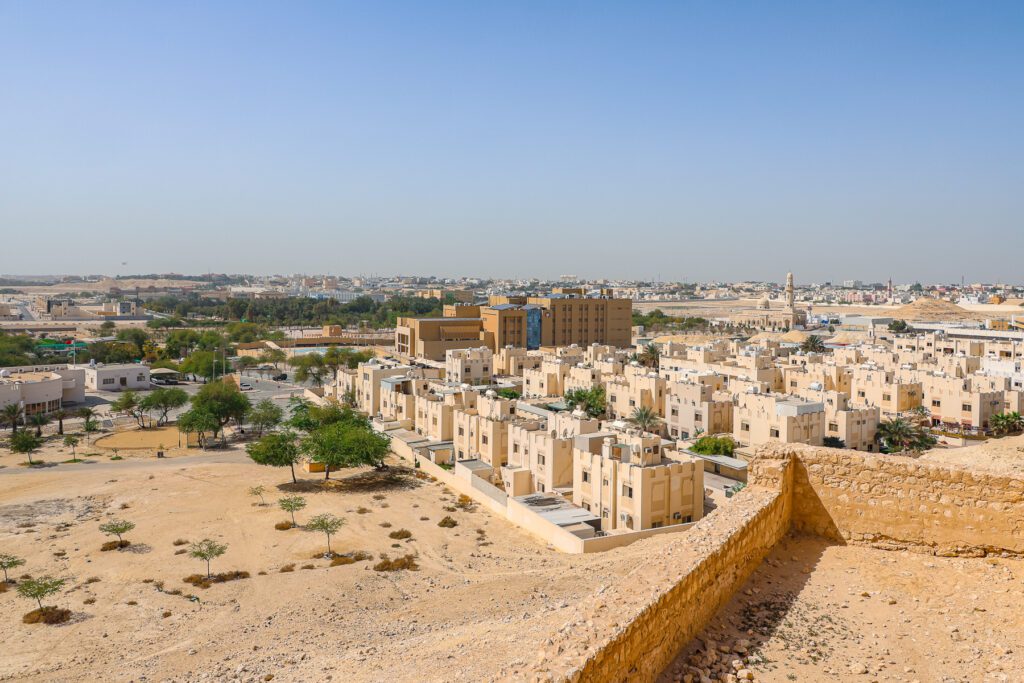
Although the fort is quite small and didn’t feature any expositions during our visit, you can walk through the courtyards and admire the scenery of Al Hunayniyah Valley. The camera photography is not allowed inside but the phones are fine. Entry is free.

13. Military museum
Close by the Riffa Fort, you can see another landmark, the Military museum. Here you learn about the military history of Bahrain and visit the halls with ancient arms, sables and daggers, rifles, the equestrian hall, military fortifications hall as well as modern military installations such as naval and aerial weapons.


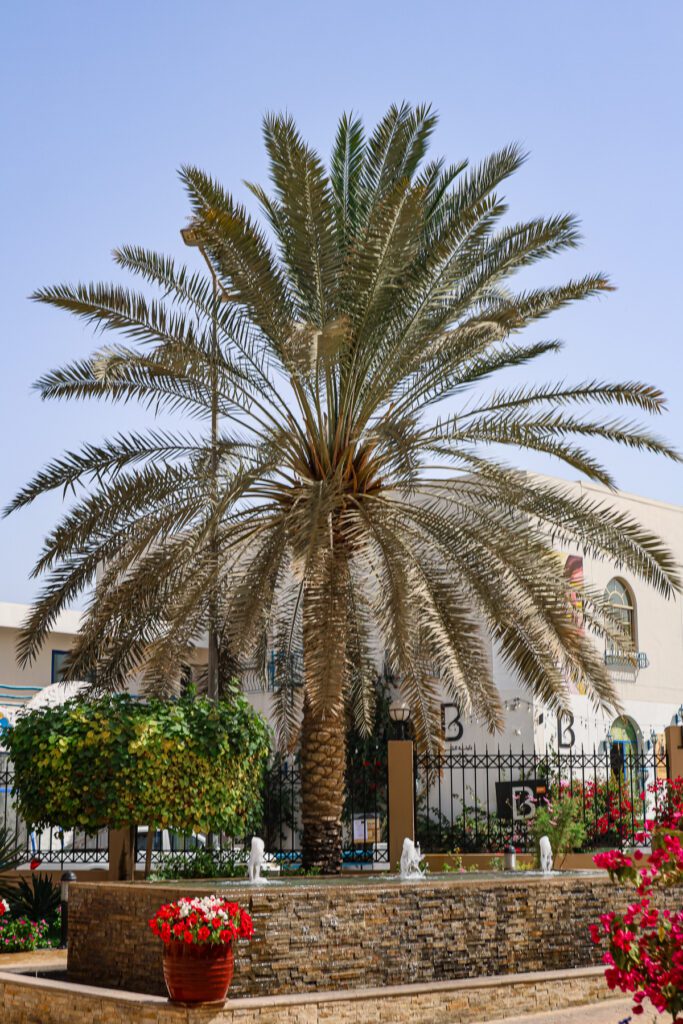
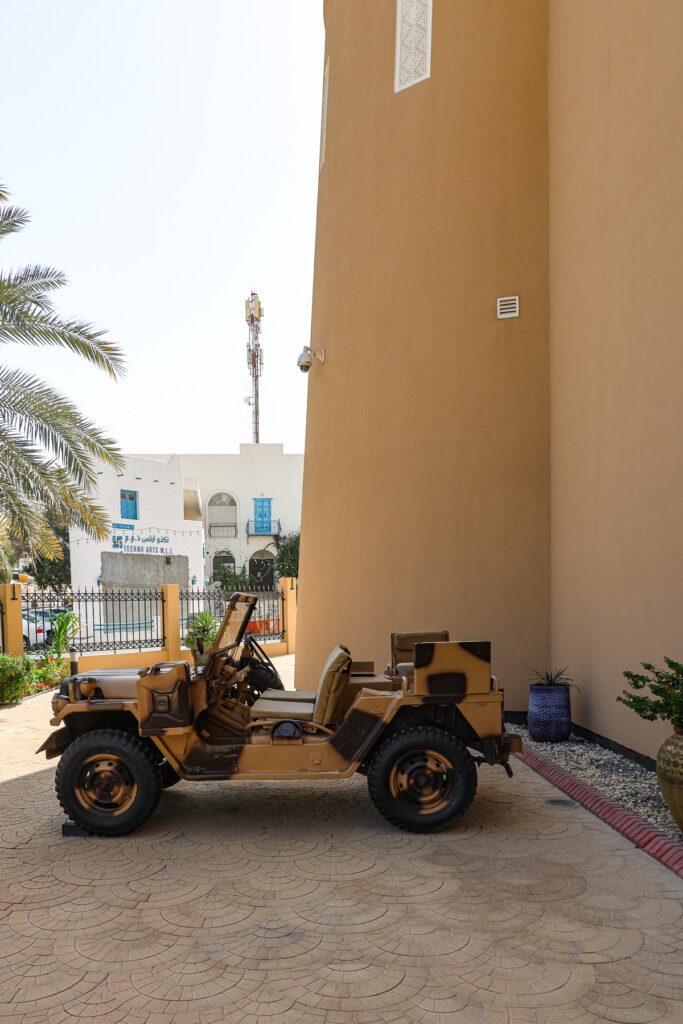
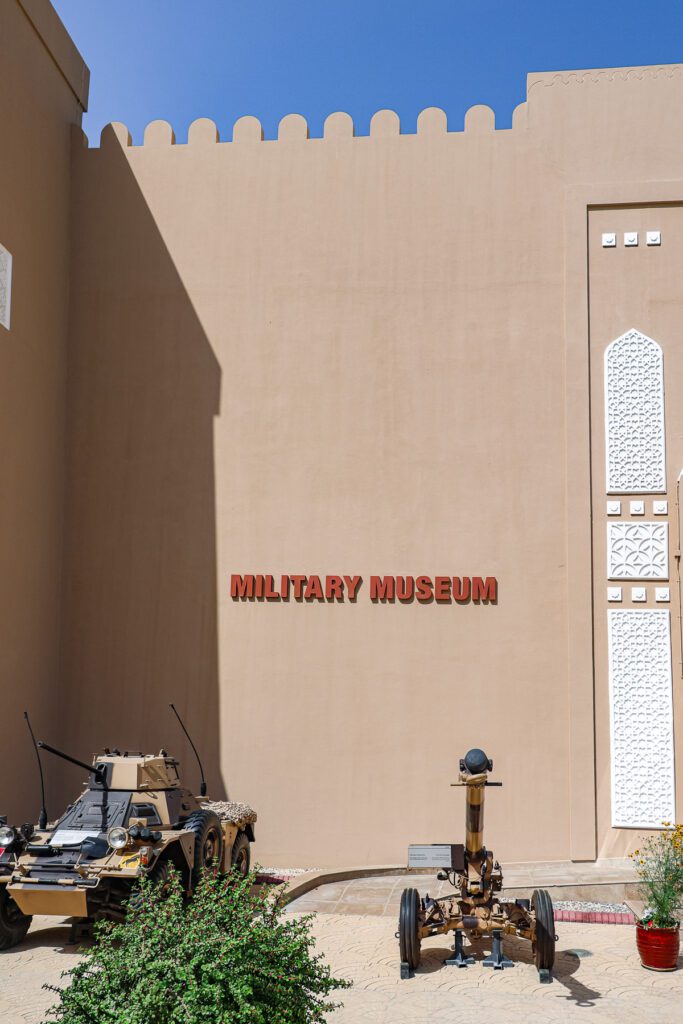

The museum is not big but enthusiasts will enjoy a visit. The photography is not allowed inside. Bring an ID with you – but the entry is free! Museum is open from 9 to 13 – check the schedule in advance.

14. Marassi Galleria
As you probably know, shopping culture is very important in the Middle East, and there are many shopping malls that can be seen as proper landmarks. This brand-new shopping mall is definitely one of them.


Marassi Galleria is a wonderful destination for the whole family: although some places are still not open, there are plenty of restaurants, cafes, a hypermarket, and high-end luxury shops such as Dior, Chanel, Louis Vuitton, and Gucci waiting for you. We absolutely loved New Shanghai, Arena, and Kanemochi there. It’s also home to the largest aquarium in the country!


15. Marassi Aquarium and Underwater Zoo
The Marassi Aquarium and Underwater Zoo located in Marassi Galleria is the largest aquarium in Bahrain.


There are many rare and unusual fish, as well as local fish here, and you can participate in the backstage tour of the aquarium as well.


This comes with an extra fee, but during this tour, you can see all the technology supporting the aquarium and the medical facilities for the fish.


16. Al Marassi promenade
Al Marassi promenade is a relatively new redevelopment area of Bahrain not far from the airport.


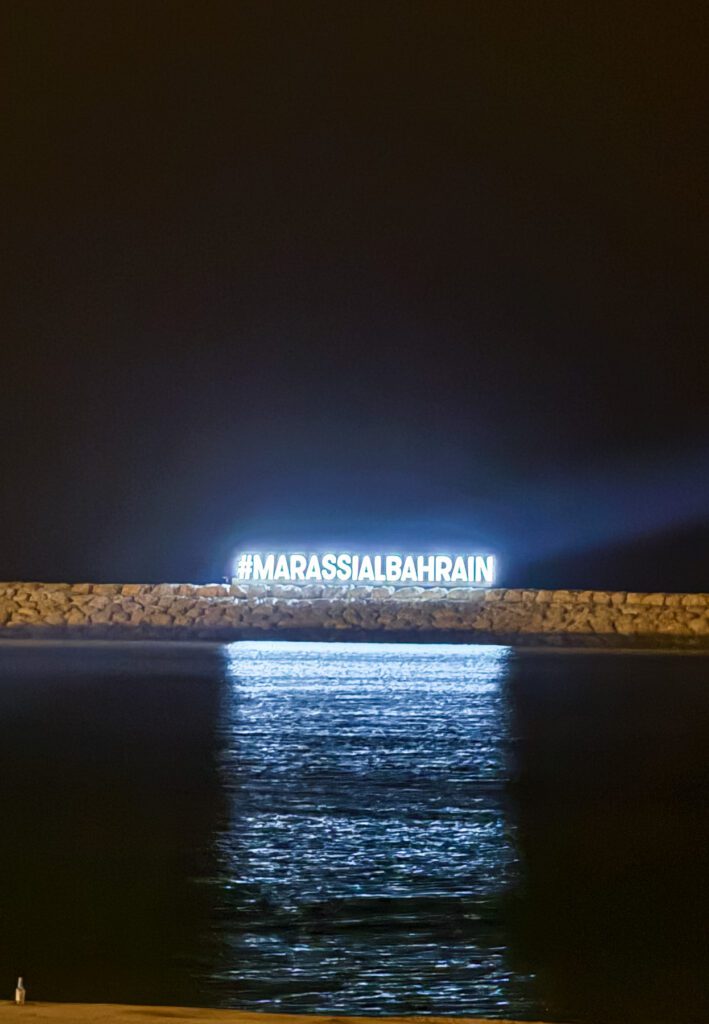

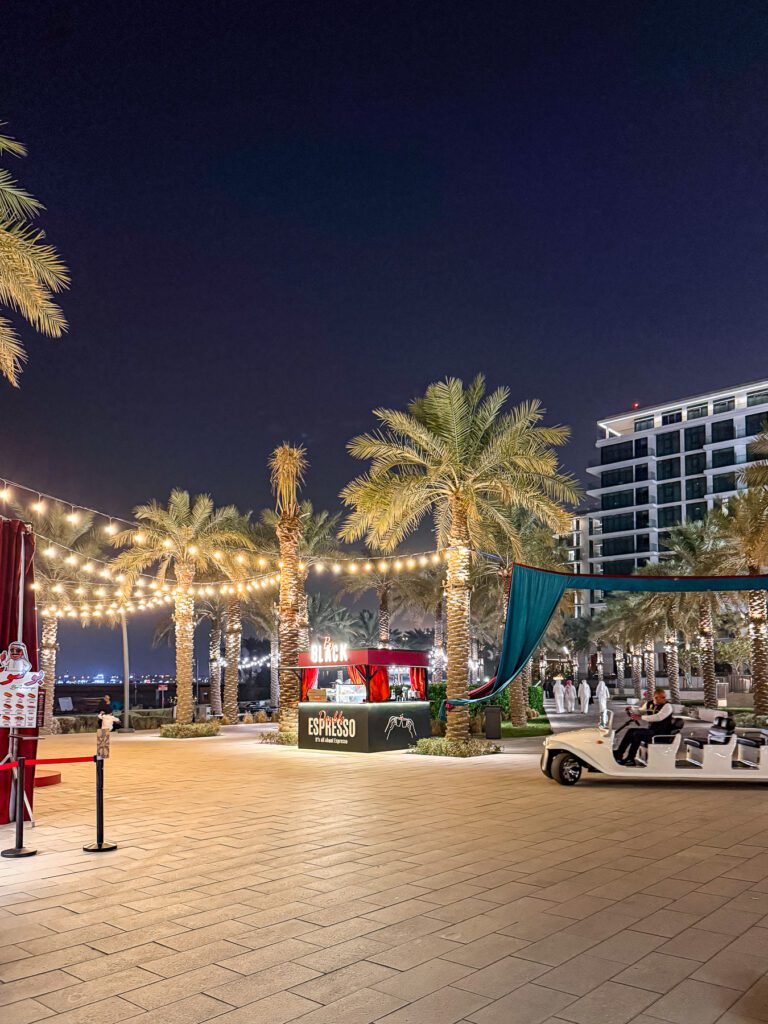
The promenade goes along the seashore and beaches from one side and has various facilities on the other such as hotels, the Marassi galleria shopping mall, residential area and numerous restaurants, food stalls and installations. It’s best enjoyed in evenings when lights are lit and the day heat is gone.

17. Royal camel farm
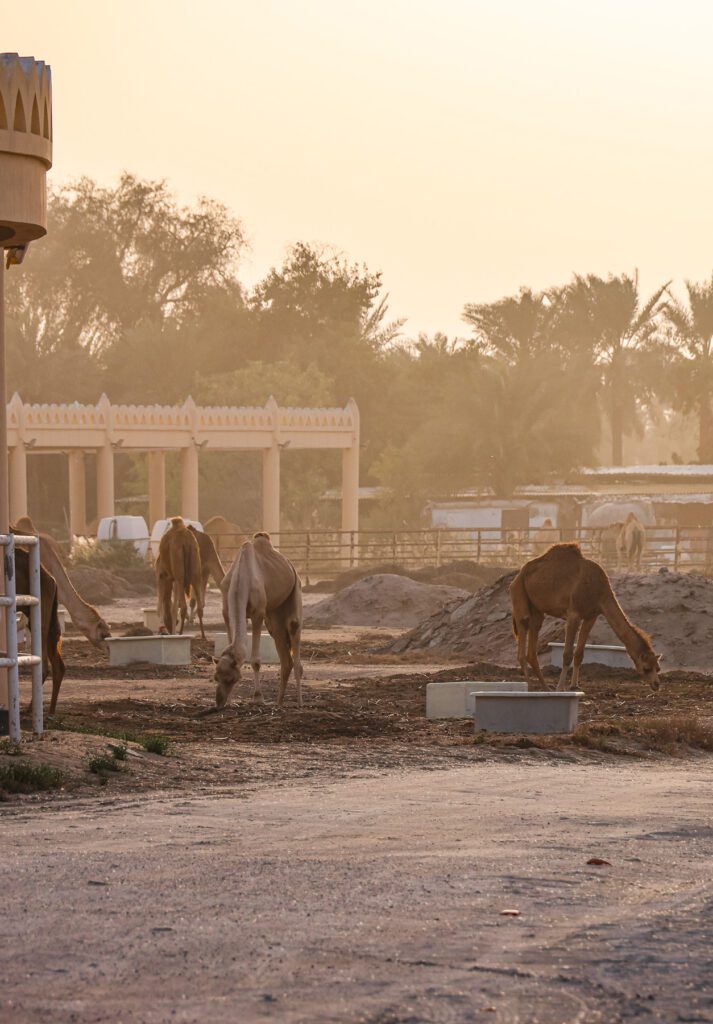
At the moment of our visit, the Royal camel farm located in Janabiyah was temporarily closed, but we still were allowed to park at the parking lot there – and from that location we spotted a few dozens of camels wandering around there freely in a traditional camel pen (we saw similar but a much smaller one in Doha, Qatar).


18. Bahrain Post Museum
Post museum located close to the Manama souq is another historical venue on your list. Postal services started operating in the country in 1884, were supervised by the British till 1965 (you can still see a post office transferred here in 1947 operating nearby), and since then run independently.


Pop in to explore the process of post operation as well as an impressive collection of over 4000 stamps from all over the world as part of the Stamps of the World Exhibit!


19. Shrinathji Temple
There’s also a hidden gem you should not miss when you walk around the Manama souq. This is Shrinathji Temple, or Shri Krishna temple hidden well behind the stall with Indian clothes, jewellery and fresh flowers.


It was established in 1817 which makes it probably the oldest Hindu temple in the region. This two story building is lavishly decorated with gold and different paintings.


20. Dilmun Burial mounds
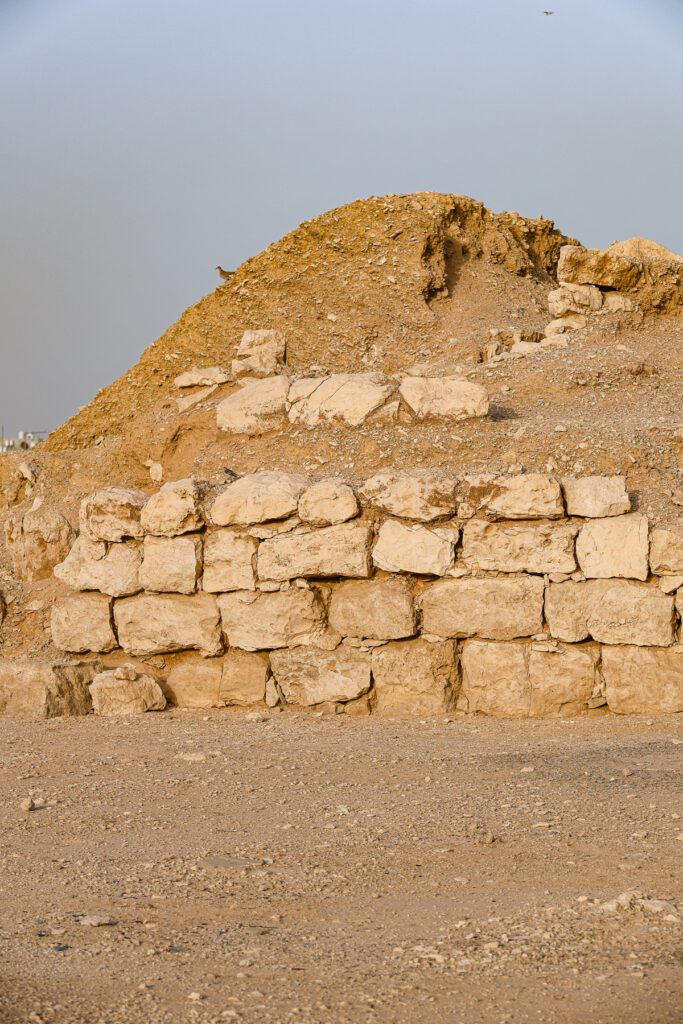
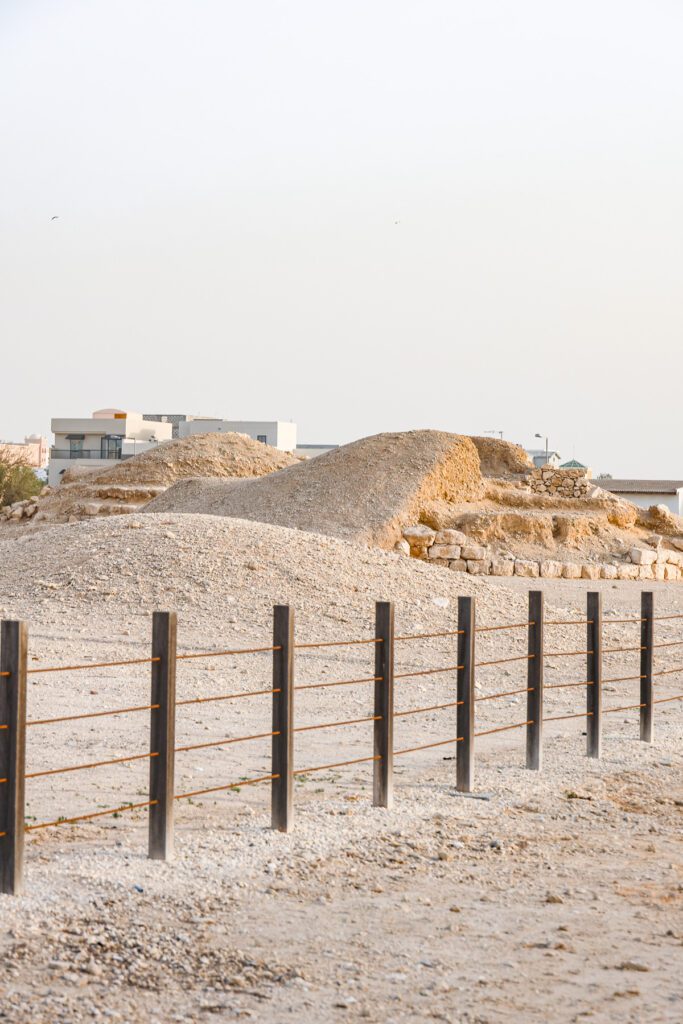
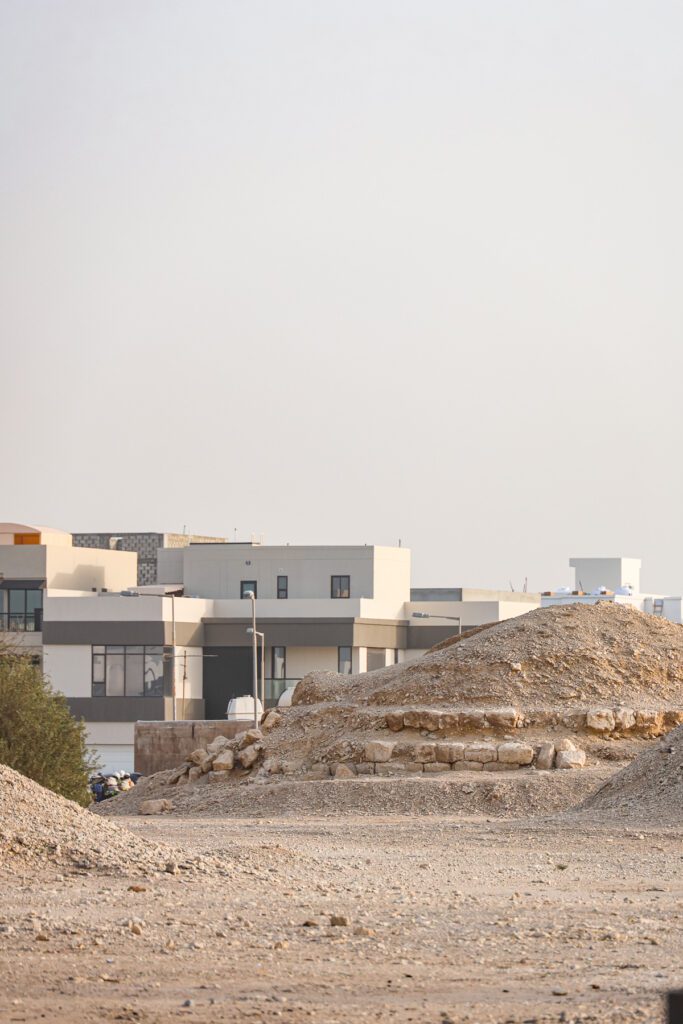
Dilmun Burial mounds is a tiny archaeological site in the middle of the island. The mounds located in Bahrain represent the Dilmun burials, one of the oldest civilizations of the Middle East dating to 3000BC – you can explore more of this ancient culture at the national museum exposition.


The mounds we visited are located within an urban area and surrounded by a simple fence – it’s hard to believe that the oldest might be 2500 years old.



21. Dhow Building Yard
You can also visit a unique site: Dhow Building Yard! It’s one of the last places where you can order a custom dhow, a traditional cargo boat of the Gulf, and yes, you can still see how the boats are built from scratch!


Dhows are a symbol of Bahrain because for centuries pearling and fishing were the main traditional activities (I’ll talk about pearling a bit later). And you can watch them being repaired or constructed right by yourself! Our visit was organised by a guide.

22. Sa’ada seafront
Boat ride is the best way to get a first impression of Bahrain – one way to do it is the Sa’ada seafront!


This is a newly developed destination in Muharraq: located close to the historical Souq Al Qaisariya, it’s a gorgeous venue with marina, restaurants and boat tours for hire. It opened in 2020.


23. Bahrain World Trade Center
The Bahrain World Trade Center is one of the most beautiful landmarks of Manama. It’s a twin tower 240 metre high skyscraper that reminds you of a boat or sails; and the innovative wind turbines in the middle of it help to provide energy for the building needs.


Also you could visit the Moda luxury mall right from here – actually we even stayed once at the Sheraton Bahrain linked to it!


24. Al-Khamis Mosque
Al-Khamis Mosque is probably the very first mosque built in Bahrain! It was founded in the 7th century – at the very beginning of Islam! – and this building was erected in the 11th century (and rebuilt a few times later).


The name of the mosque comes from the weekly Thursday souq that used to take place weekly on this spot till the 1970s. As you can see, twin minarets of it are currently under restoration but you can still visit the area around this mosque and a small exhibition inside the visitor centre.
25. City centre mall
Pop into one of the mail shopping malls of Manama, the City centre mall. Again, everything is familiar to Brits plus international and local brands: Boots, Debenhams, Clarks, Dune, Elan… a very nice and welcoming place to escape the heat.


We had the most magnificent lunch at Brunch and Cake, with salads, croquettes and lobster mac&cheese. Don’t miss the Souk section of the City centre, it’s really impressive!


Where to stay in Bahrain
In my other blogs you can check my stays at the Conrad and Sheraton in the capital city, but for our third time in Bahrain we went for a hotel outside Manama.


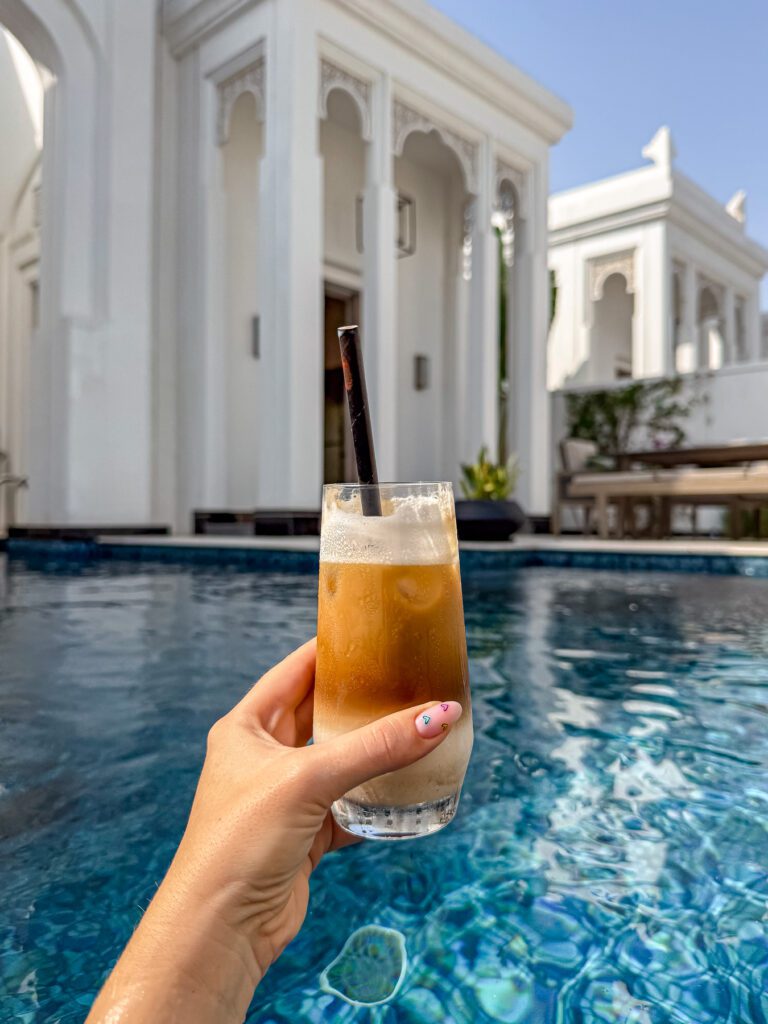
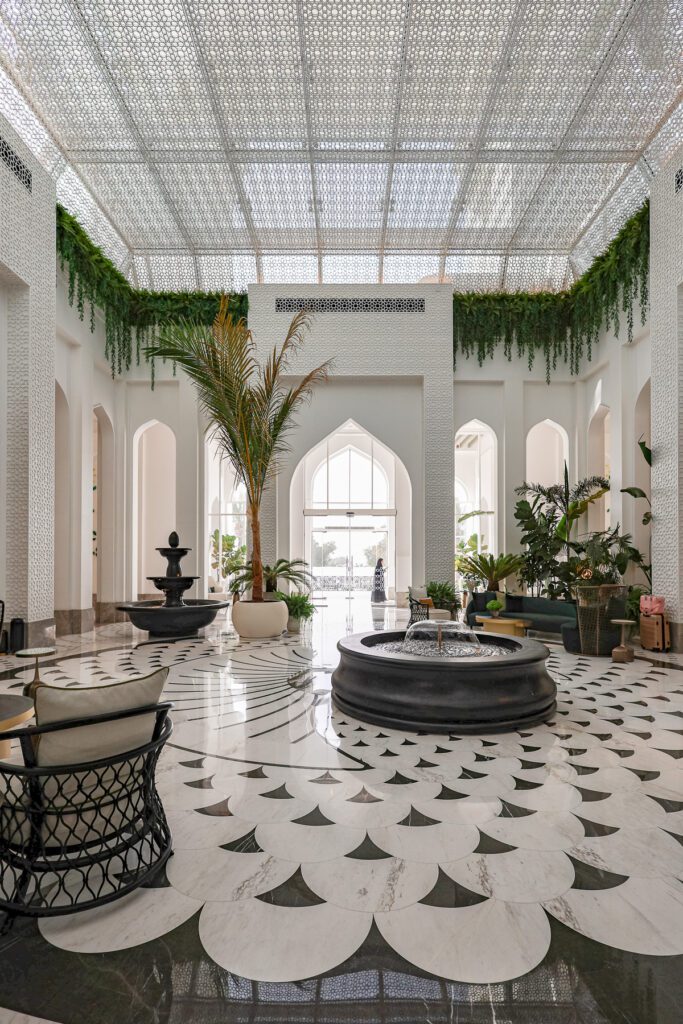
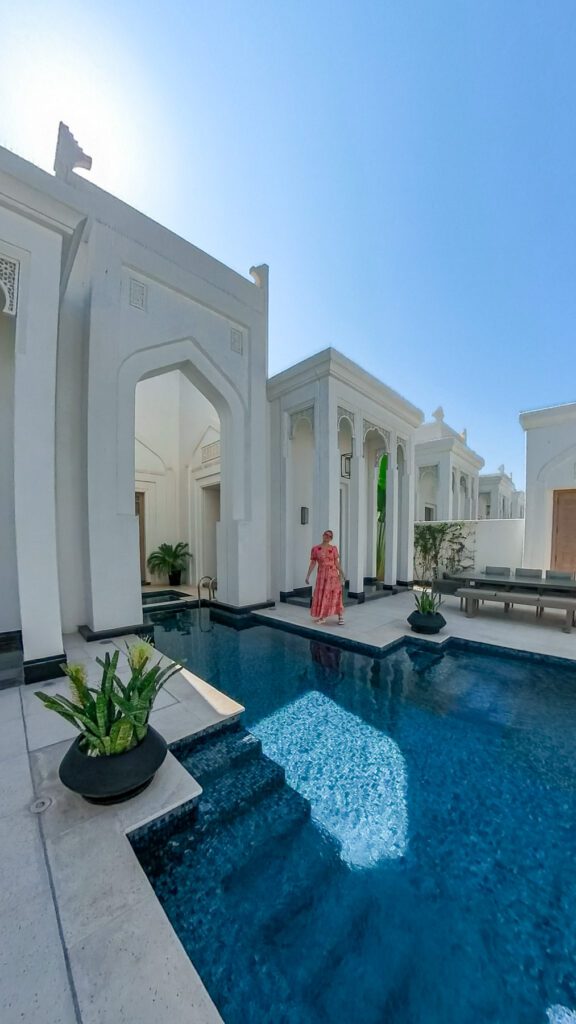
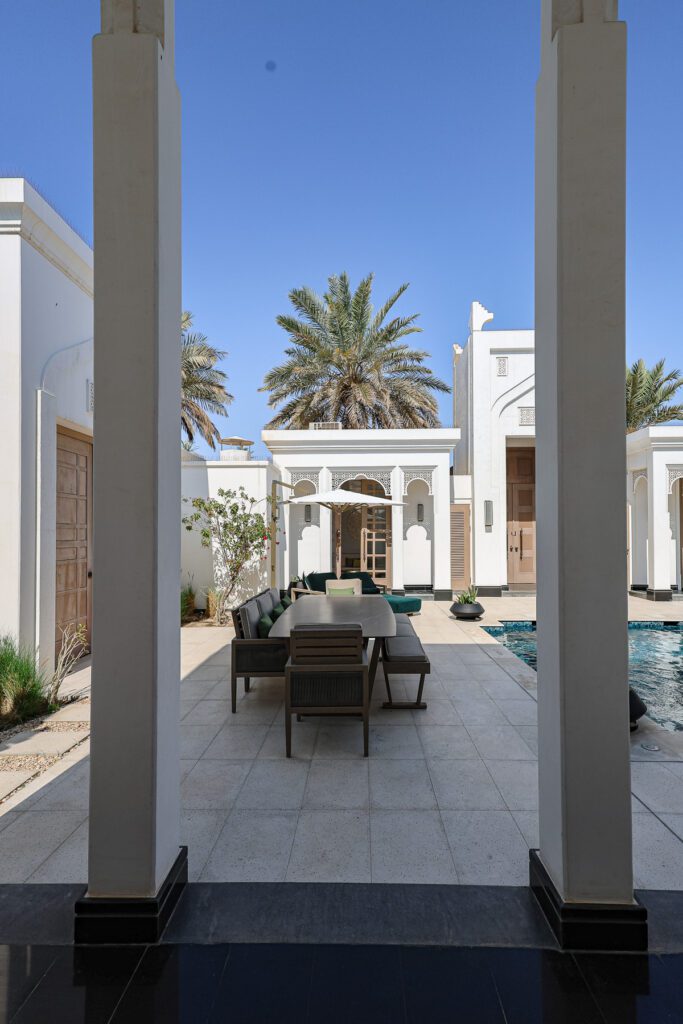

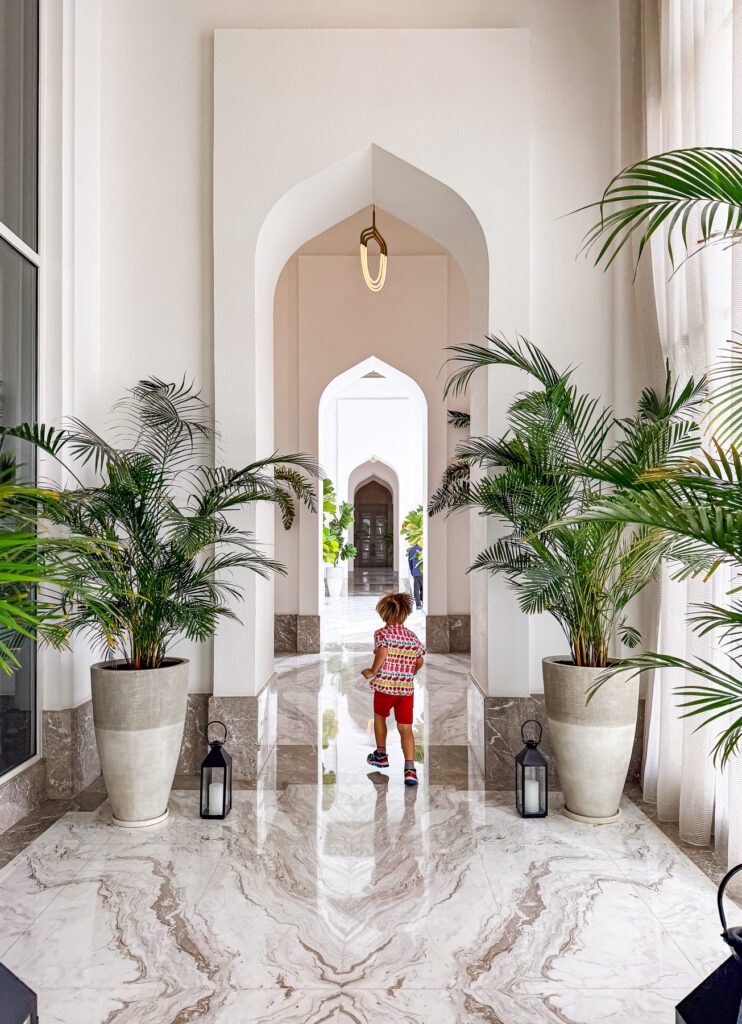
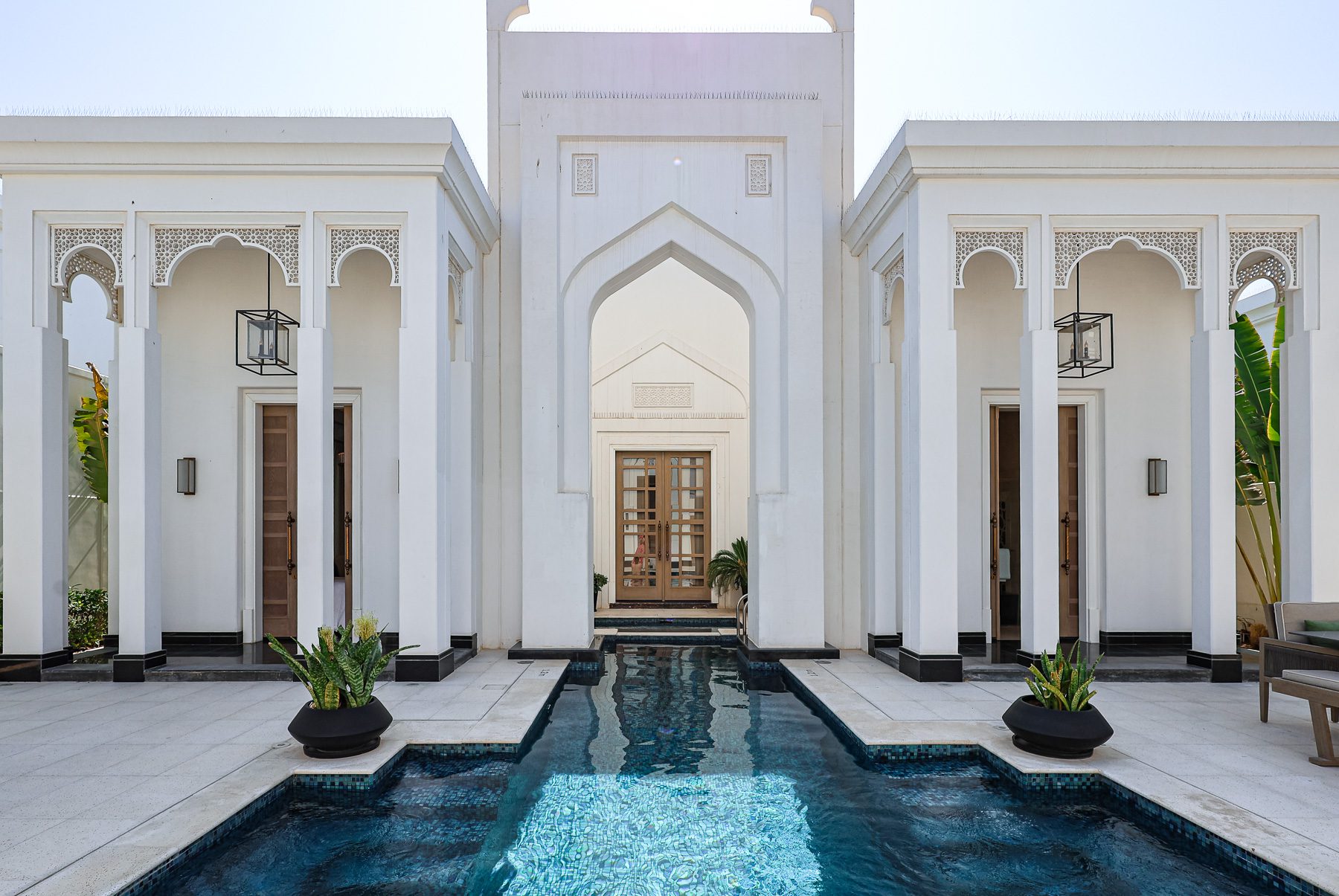
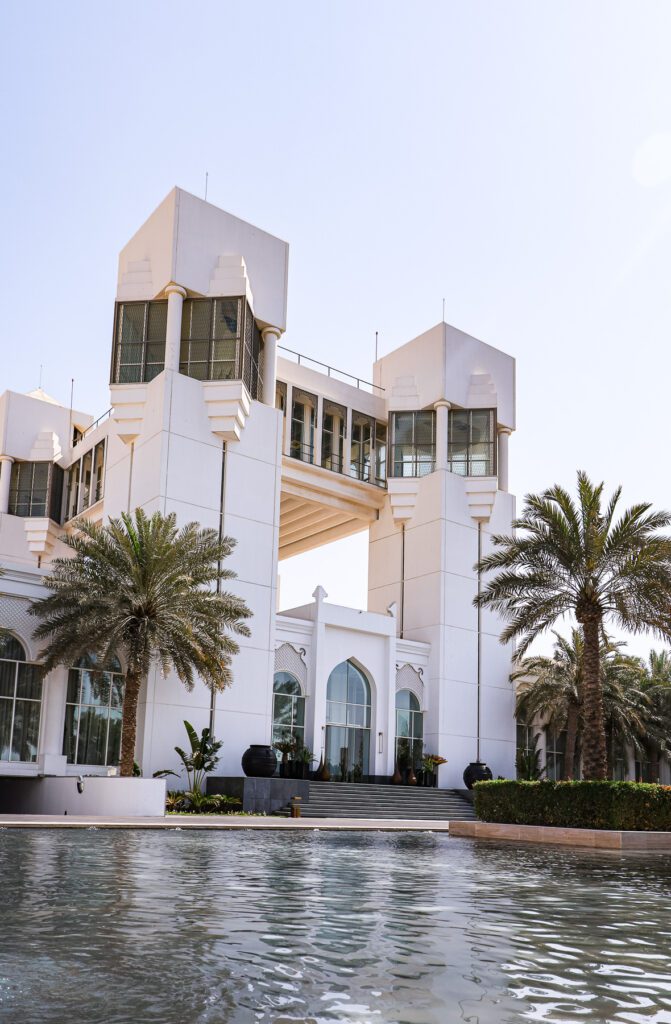
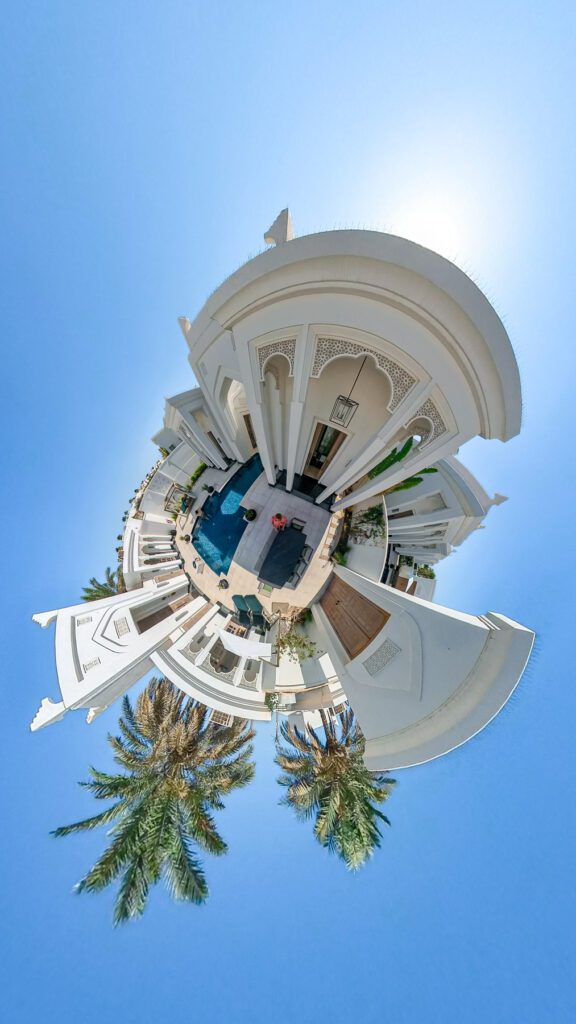
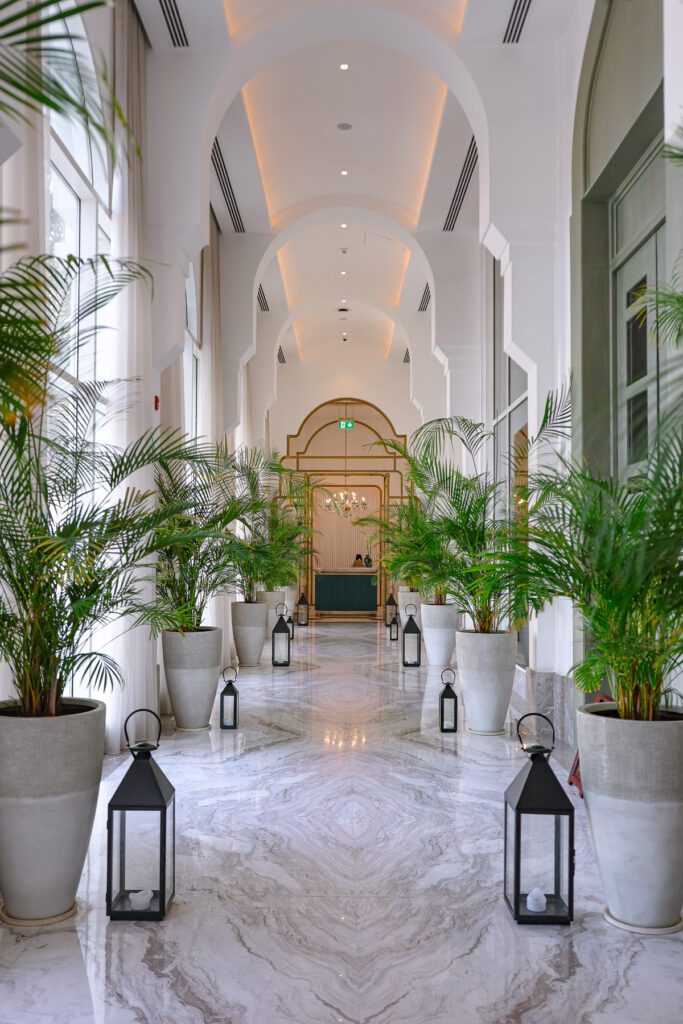
The Raffles Al Areen Palace is an oasis in the desert located close to the Bahrain international circuit.

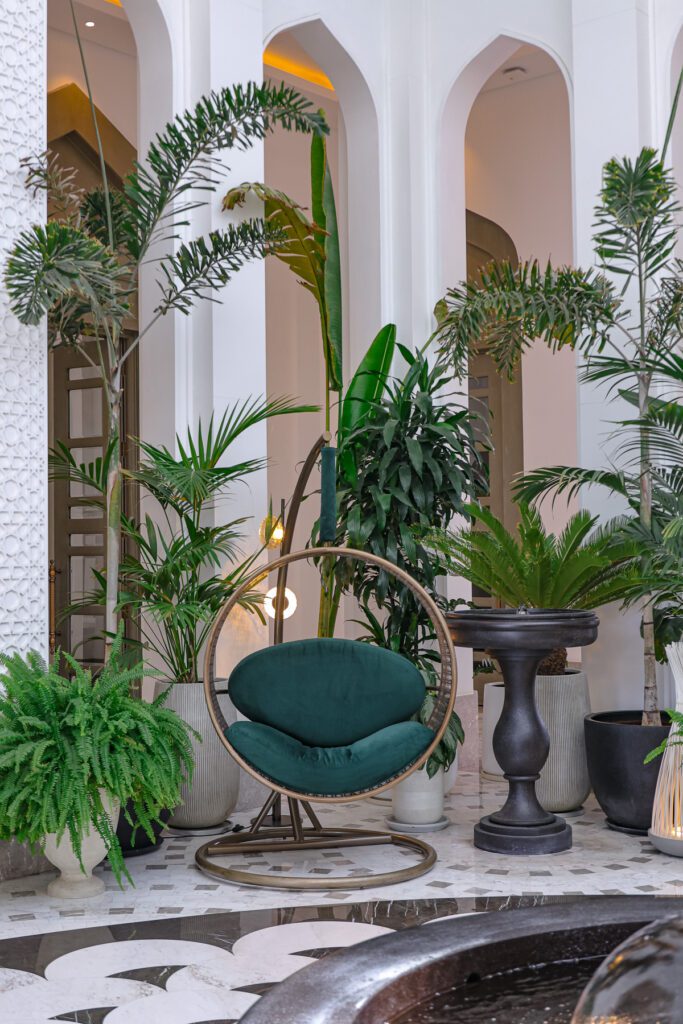

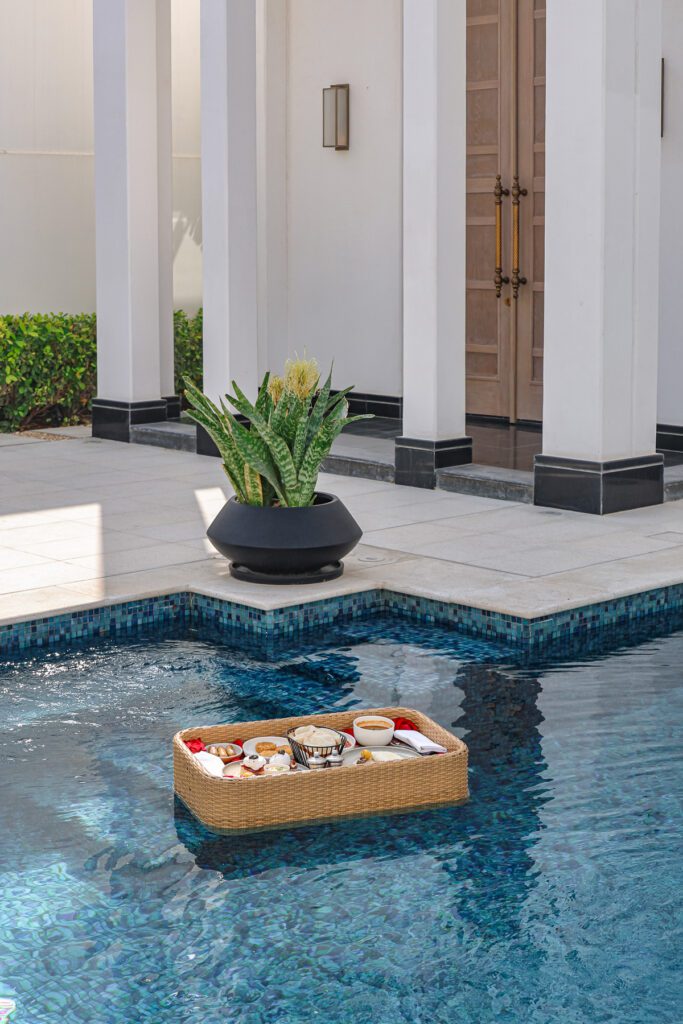
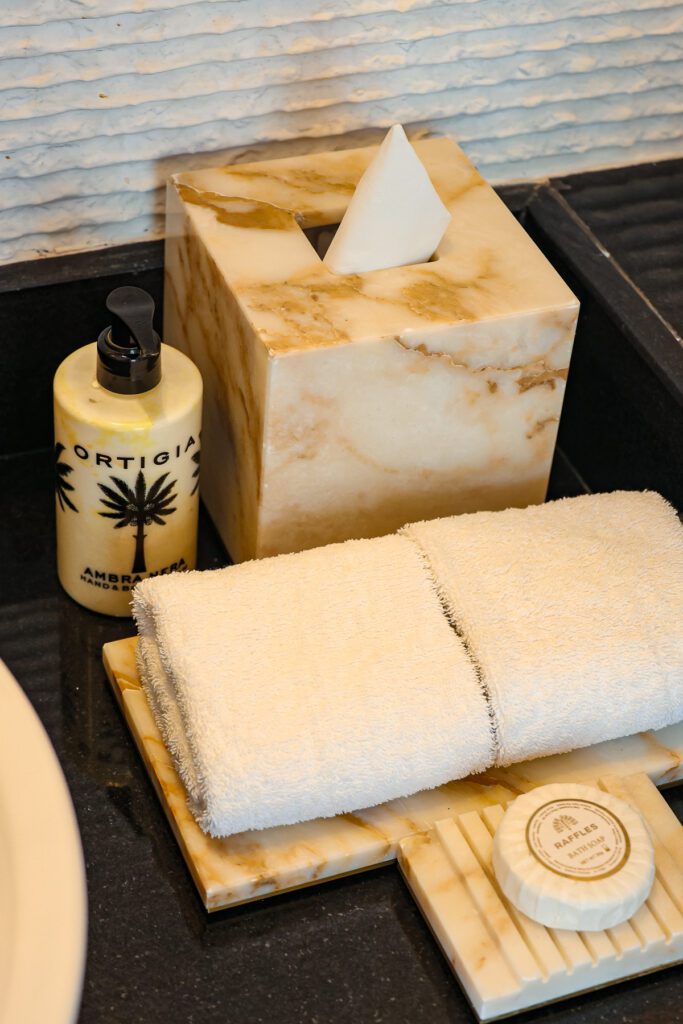


This hotel is a hidden gem of the country for those who would like to spend some relaxing time in Bahrain in a extremely aesthetic environment.
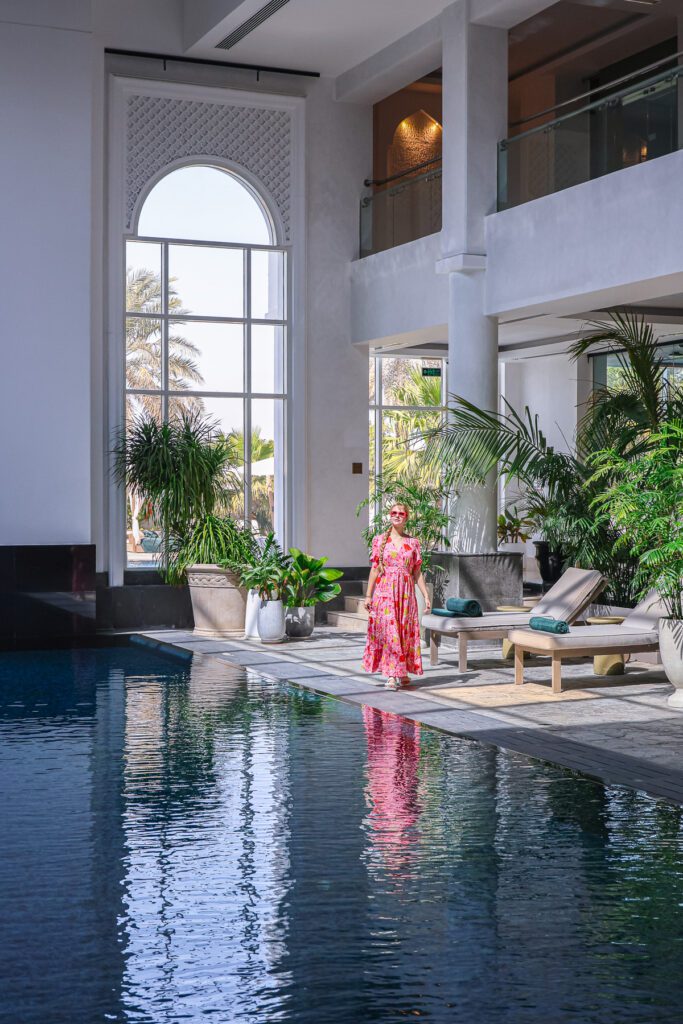


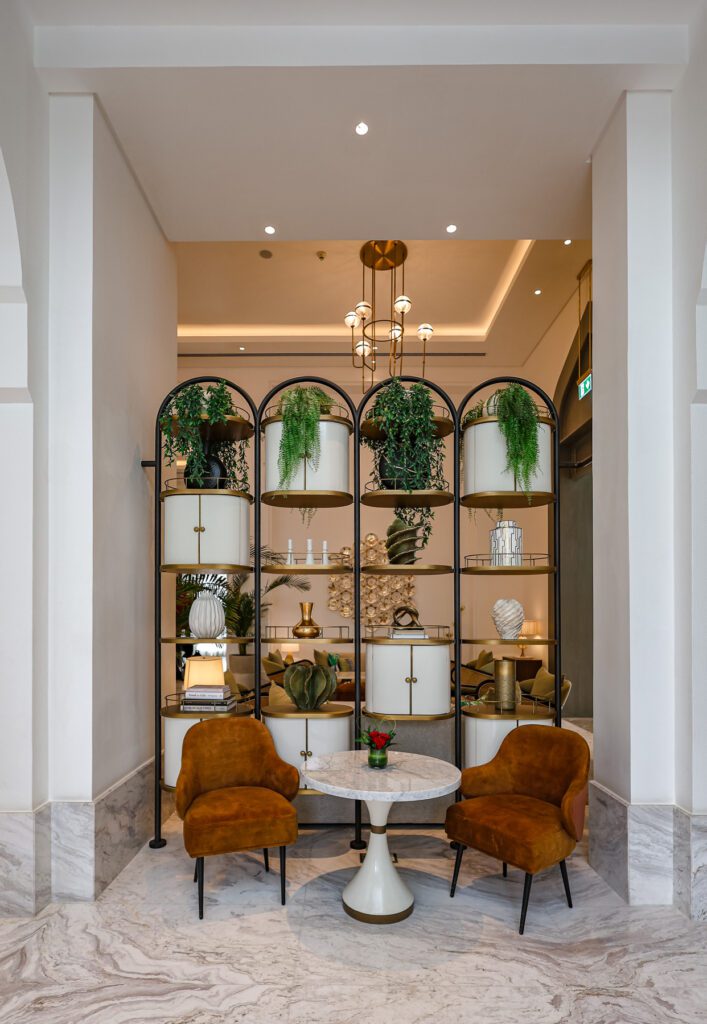


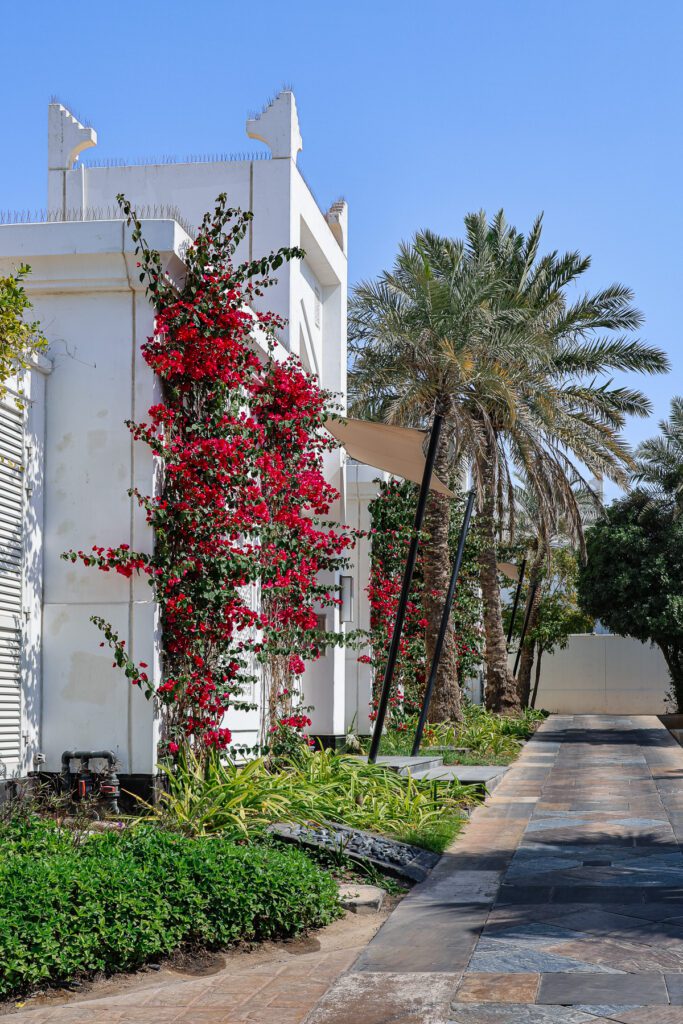
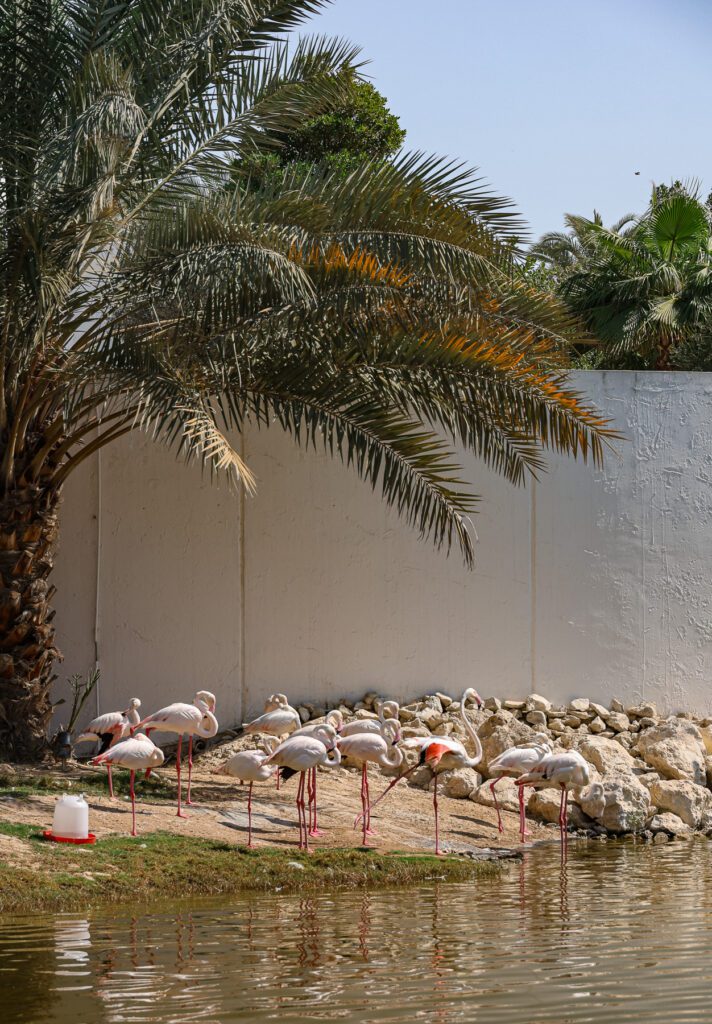
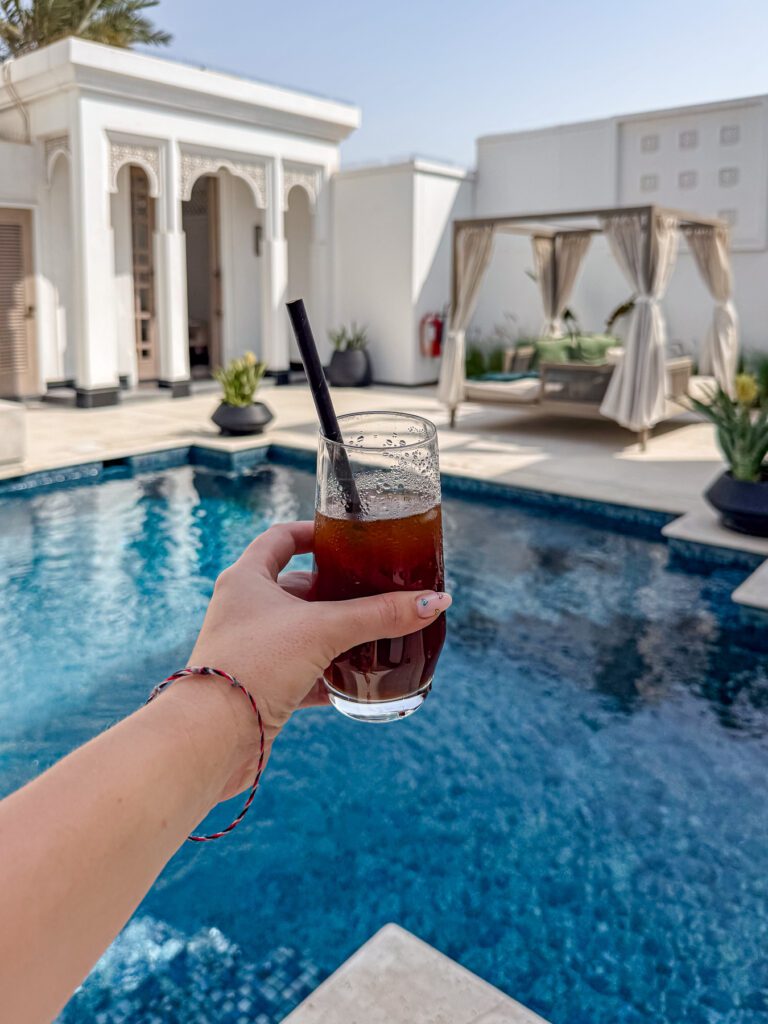
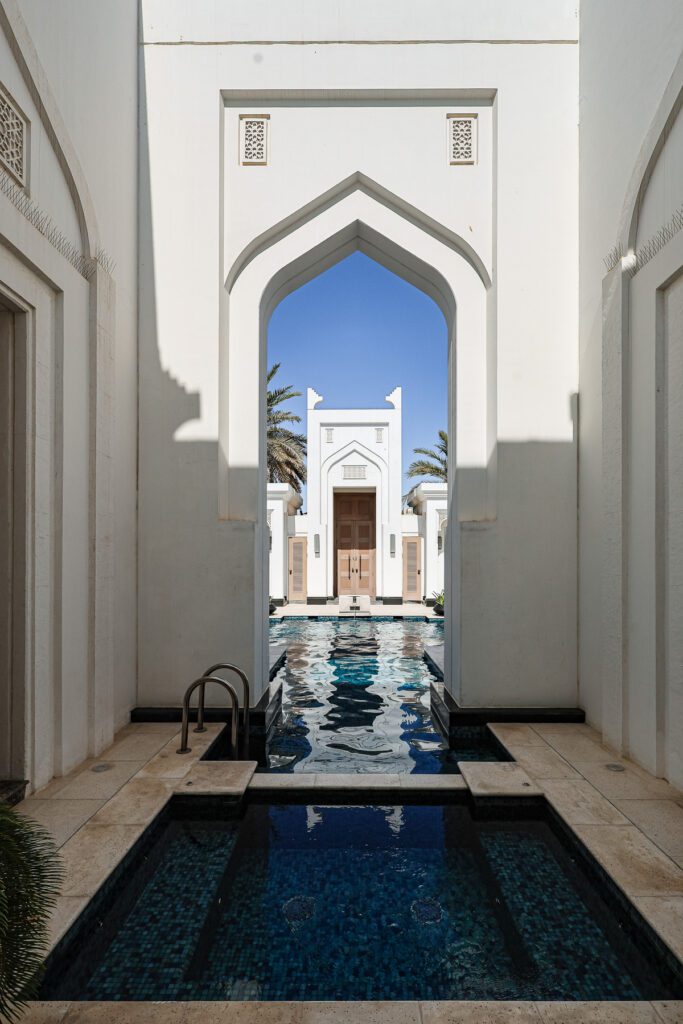
It looks like a real Arabic palace and has a nice territory with water flowing around, palm trees, frangipani and bougainvillea blooming and even a small flamingo lake.



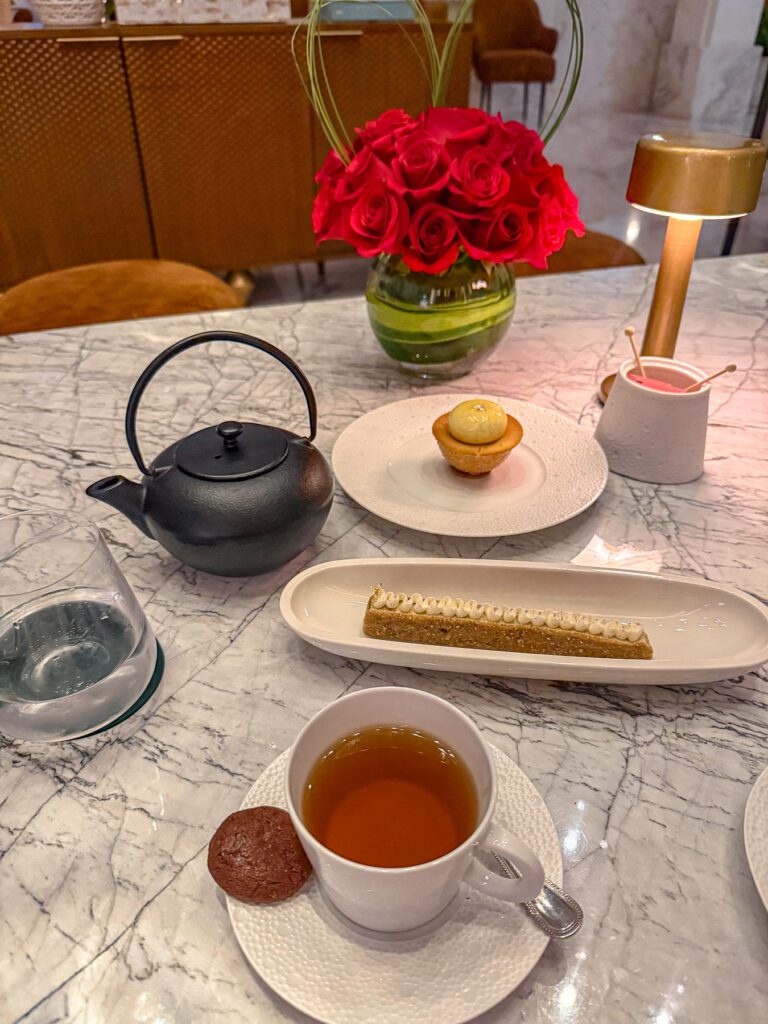
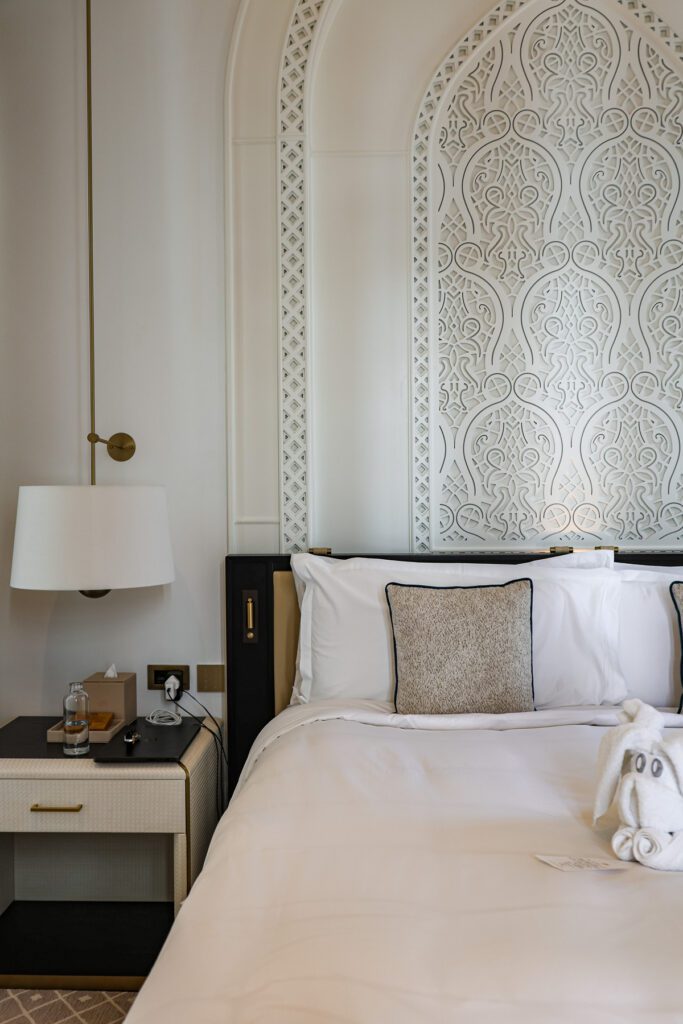
We stayed in a private villa – it’s the biggest villa I’ve ever stayed at so far!


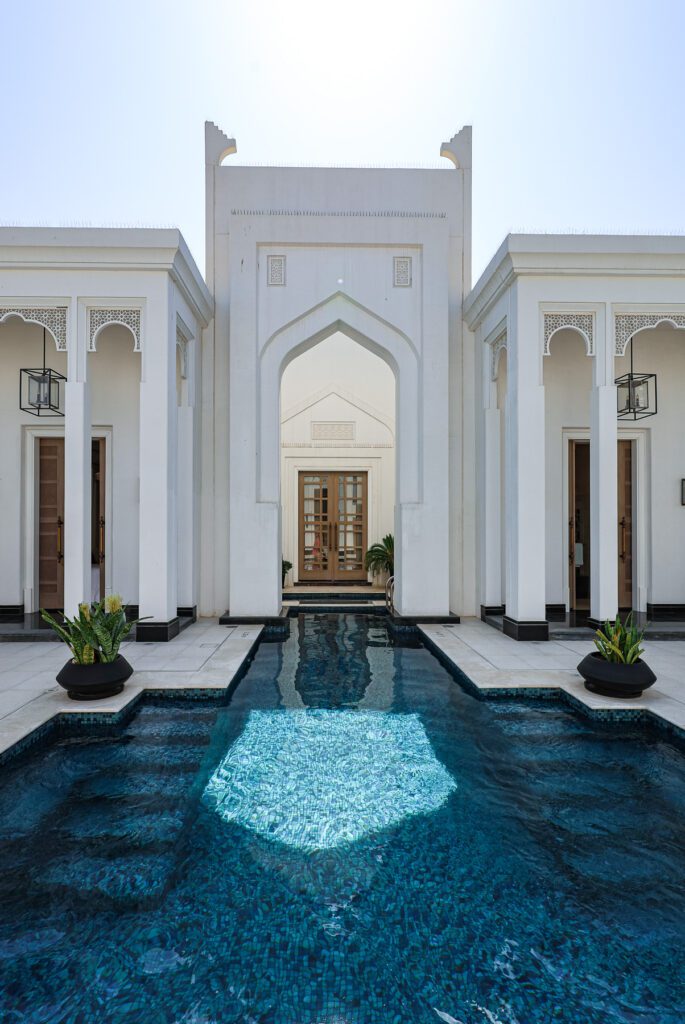

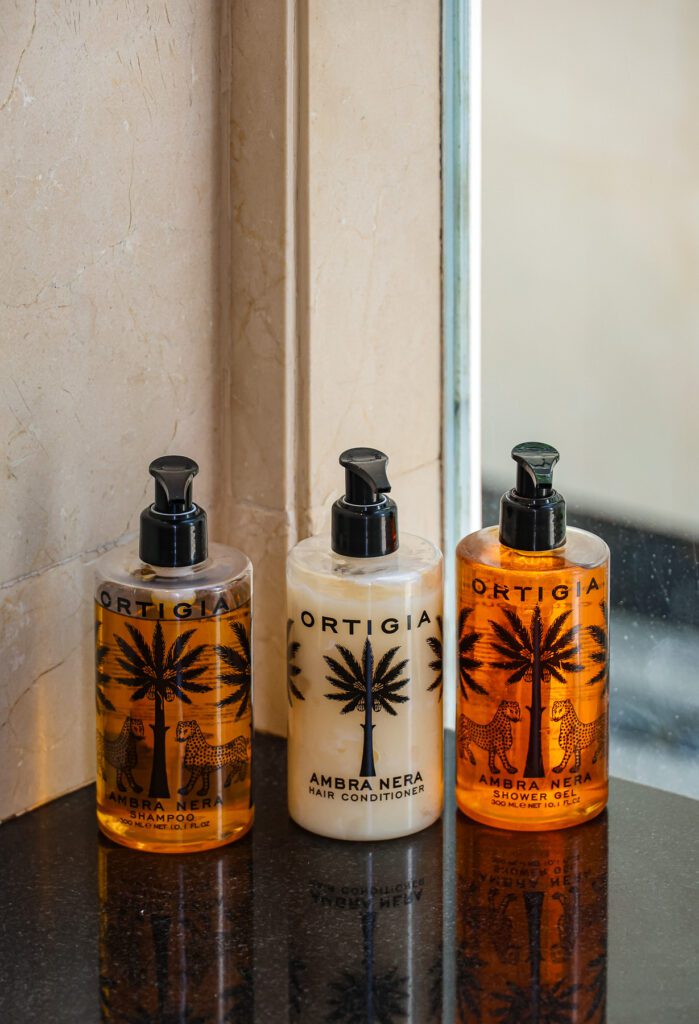

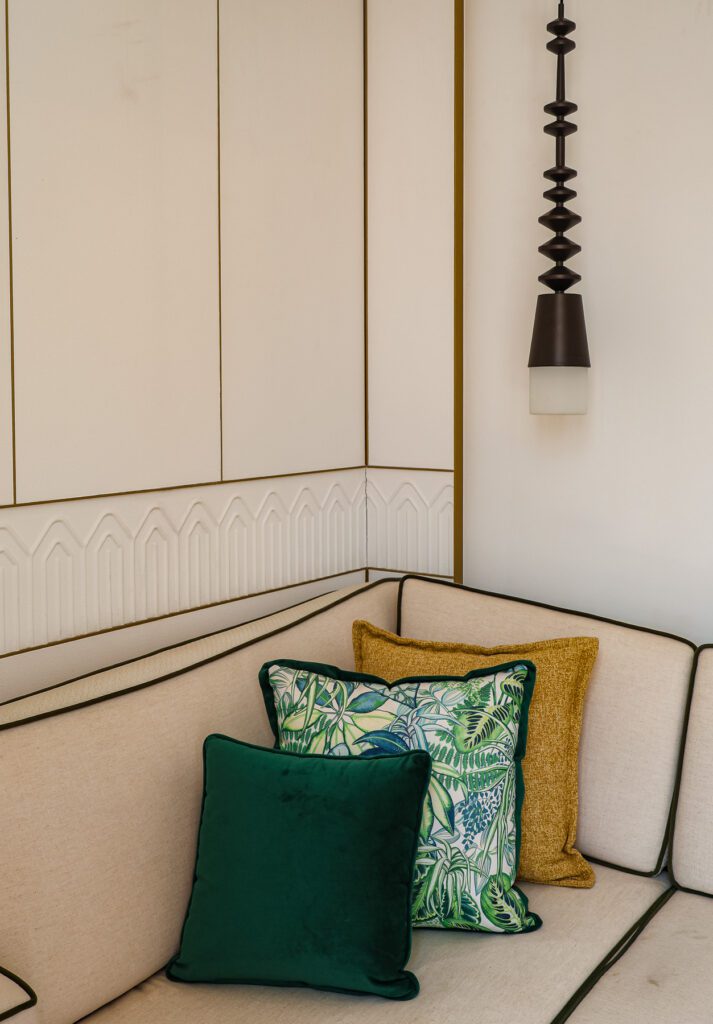
We had a courtyard with pool and jacuzzi, an inner and outer dining spaces, a reception, a bedroom, a walk-in wardrobe and a massive bathroom.


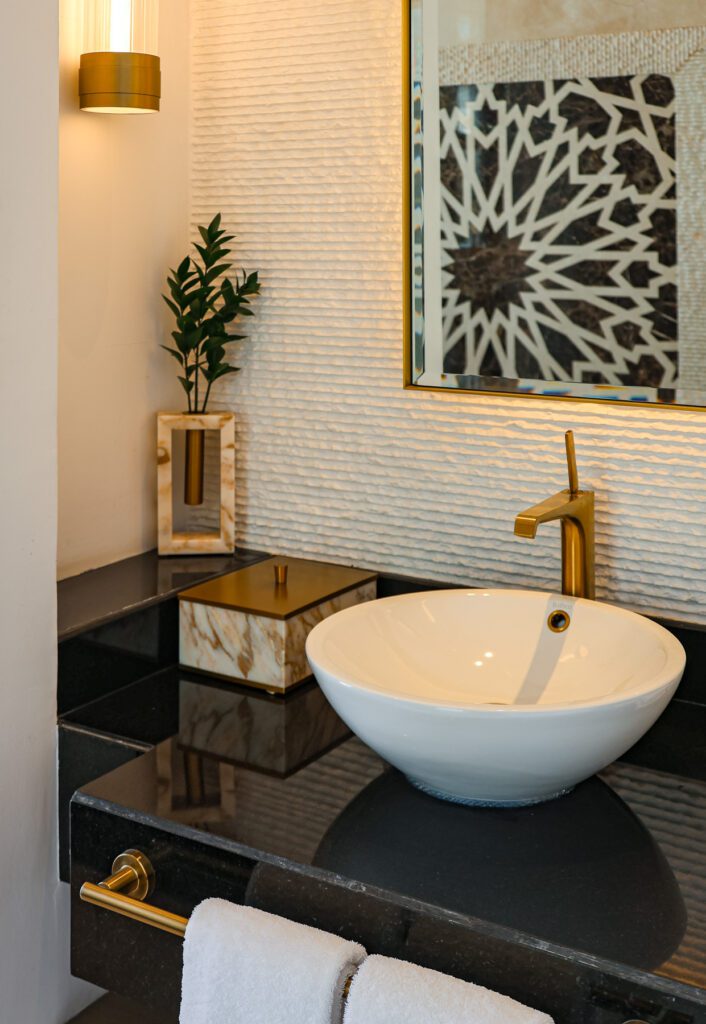


Upon arrival, we had lovely fresh flowers and fruits delivered to our place – and I fall in love immediately with places that serve me rambutans.
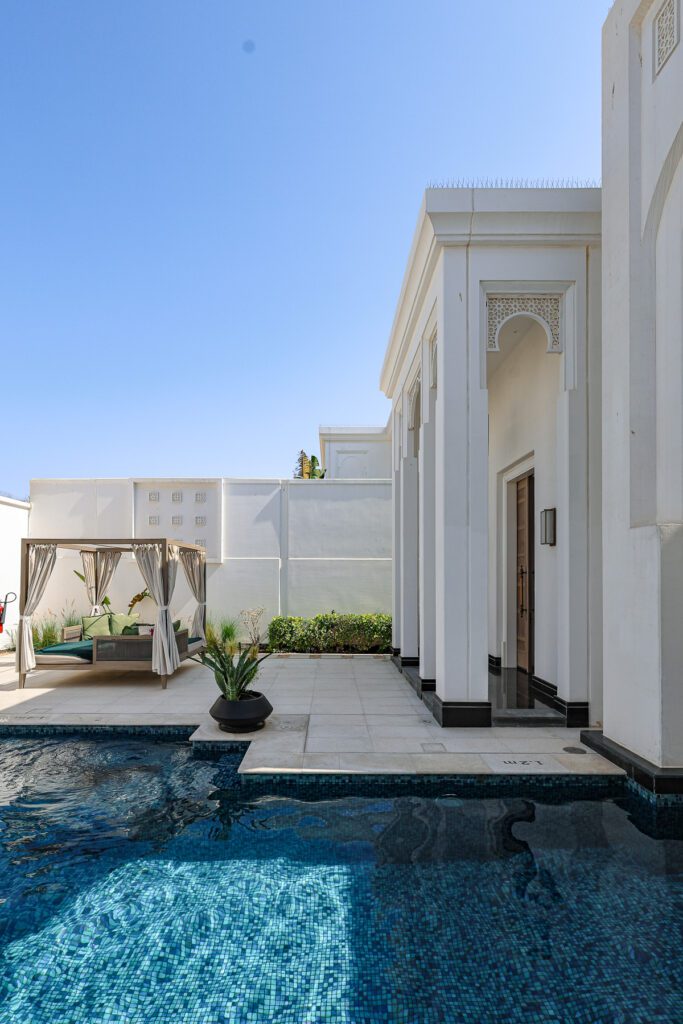

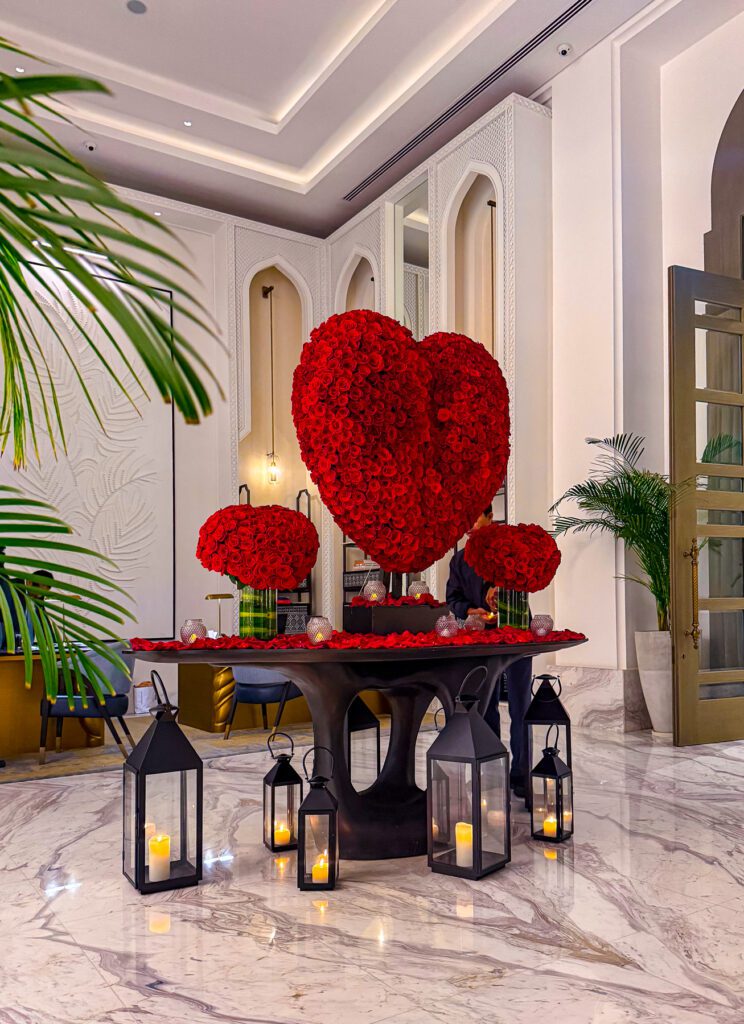


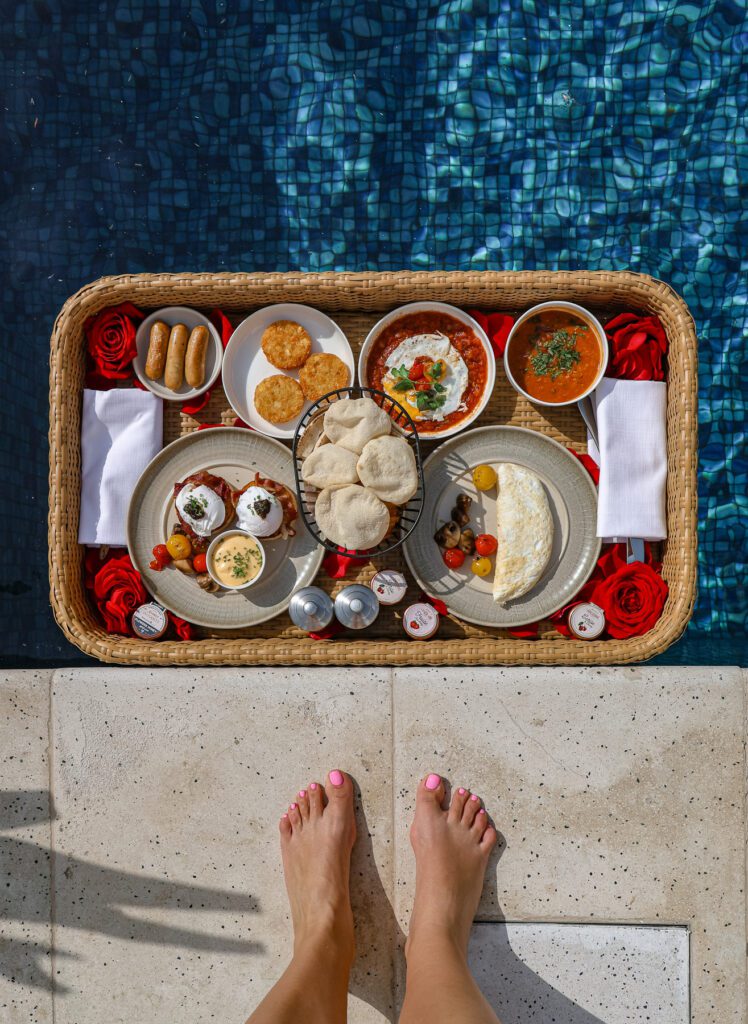
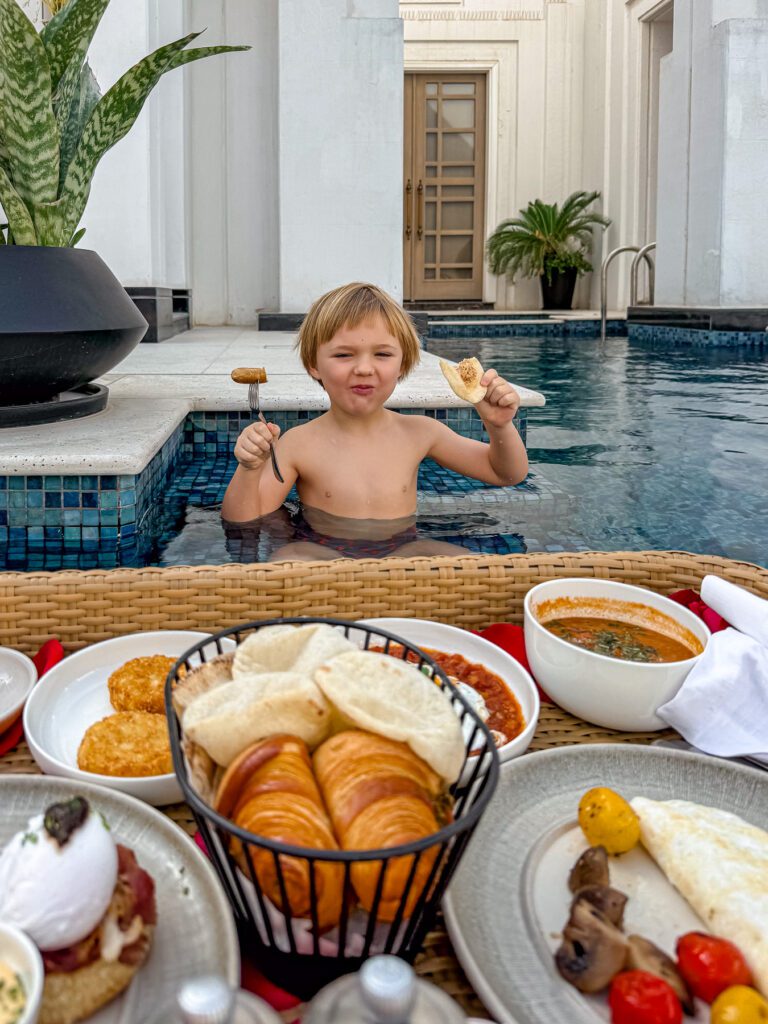
In villa dining in the Raffles Bahrain has fantastic selection of Arabic dishes as well as some Asian cuisine as a tribute to the iconic Raffles hotel Singapore.
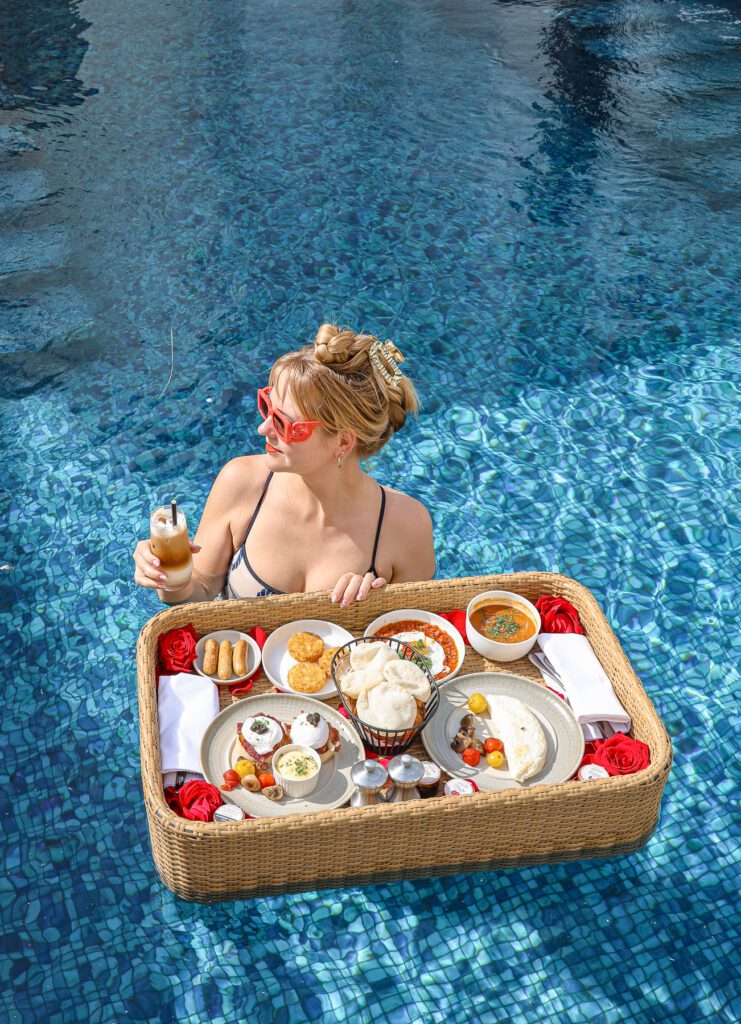



Besides that, I had an amazing body treatment with scrub, wrap and massage at the SPA village – highly recommended!


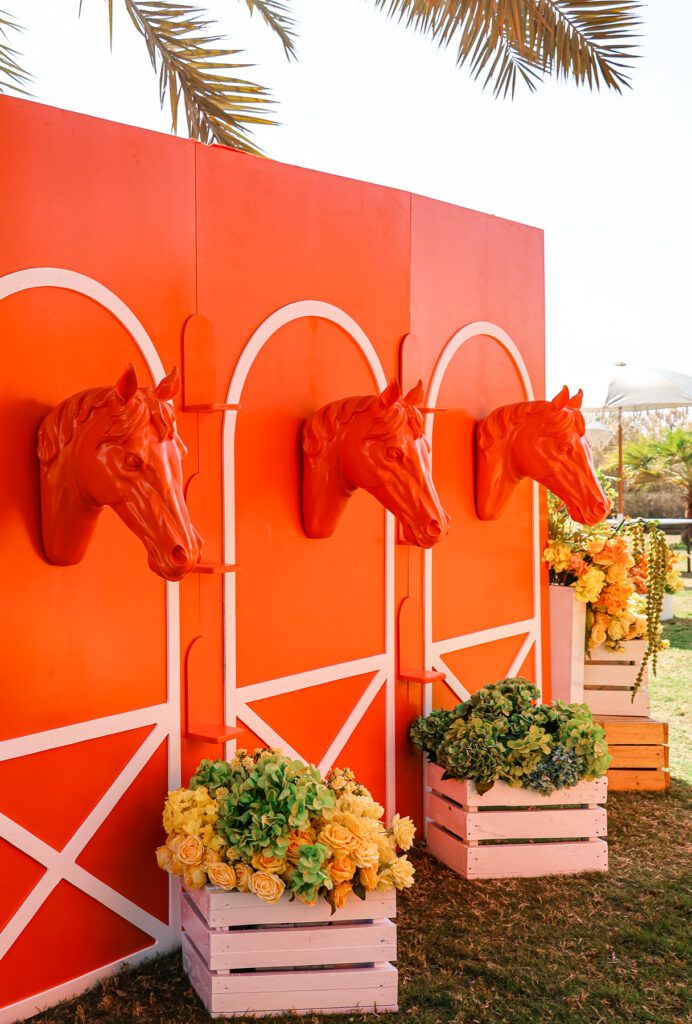
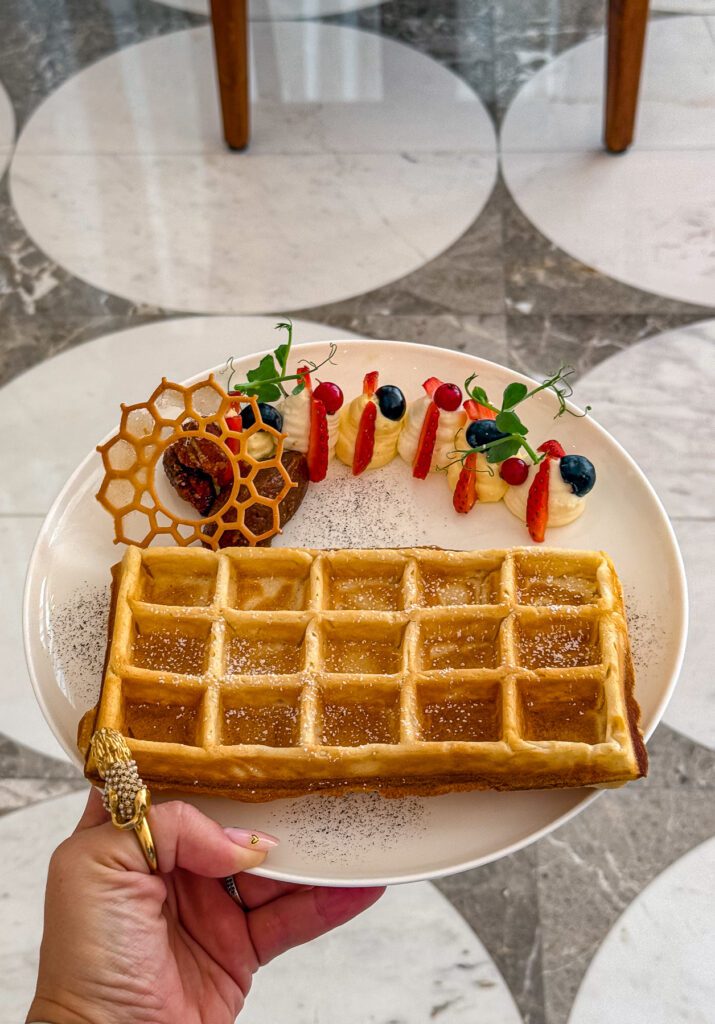
For breakfast, you can choose hot dishes from the menu (like eggs, pancakes, waffles etc), and bread and some mezze are served per each table additionally. On some occasions like weddings taking place in a hotel there’s also a small buffet with pastries, cheeses, and fresh veggies and fruits.
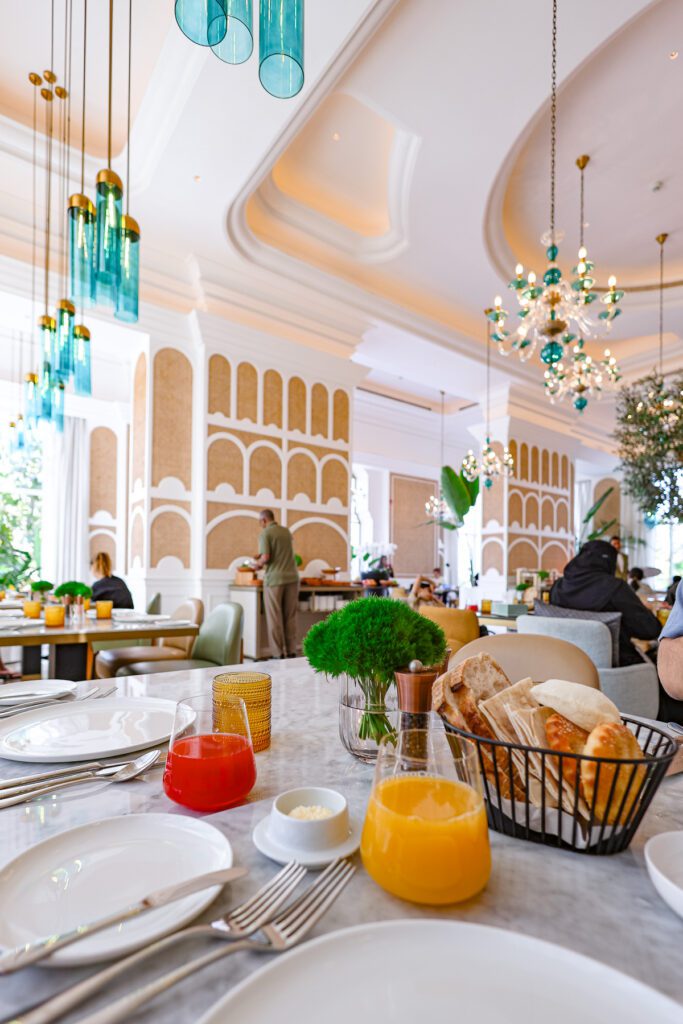


They also have a kids club, a nice cafe and a few restaurants available for the guests as well. Overall, our experience was extremely enjoyable, and I’d gladly return there.




You might also like my other blogs about the Middle East.
Hope you liked my new blog,
Yours,
Anna xxx