Not many people actually visit Meknes and Volubilis in Morocco, but both are worth a visit! Fez is a great starting point for exploring some unique Moroccan heritage sites – try to squeeze these cities into your itinerary as both were the main cities of the region for some time and both are UNESCO heritage sites!


Probably the best way to explore them is to rent a car or go with a guide, but there’s also a train to Meknes that you can use.


And if you choose to drive, your route will be the most picturesque one: Sidi Chahede artificial Lake with the mountains and olive groves in the background is an impressive sight for sure!


Meknes
Meknes is one of four Imperial cities alongside Marrakesh, Fez, and Rabat. It was founded in the 11th century and for centuries remained a military citadel until Moulay Ismail, the sultan from the Alaouite dynasty, made it the capital in the 17th century.


Nevertheless, the capital was moved again in the 18th century, and the city became less important and suffered from an earthquake on top of that. Now it’s the sixth most populated city in Morocco. And if Morocco is a country of storks, Meknes is its capital! I presume they come here for nesting as the stork nests are everywhere!


Mausoleum of Moulay Ismail
Your first stop in Meknes should be the Mausoleum of Moulay Ismail from the Alawi dynasty, who ruled Morocco from 1672 to 1727. He was one of the longest-ruling sultans of Morocco and also the one who made Meknes his capital!


Moulay Ismail is also famous for several other things: his harem officially counted 500 women (and he had at least 800 children; that’s not a legend – what a hard-working sultan he was), and he was especially interested in the white slave trade and was even nicknamed the ‘bloody king.’ You can learn more at the Habs Qara prison if you have time (it was closed during our visit).


His mausoleum is located within the Kasbah area of Meknes (meaning the fortress or the castle, where ordinary non-military people couldn’t come freely) and it’s a magnificent piece or history and architecture.


The mausoleum was erected in the first half of the 18th century, and it’s an absolutely astonishing place, with all the tile work, fountains, ceiling and door painting, and decorations. We were able ti visit it outside the hours of prayer.


Royal Palace
The gates of the Royal Palace are a beauty as well, but you can’t visit the palace (it’s a UNESCO heritage site).


The walls of the palace are impressive as well – just look at this mighty structure stretching for kilometres!


Agdal reservoir
The large reservoir Agdal, also located in the Kasbah close to the palace and to the side of the former horse stable, was meant to rival the Versailles Gardens, as the Sultan had been interested in the lavish life of Louis XIV of France. And it definitely looks impressive! It’s surrounded by a promenade that is under renovation at the moment.


Bab Mansour Gate
Head to Bab Mansour Gate, the most recognizable city landmark. This gate’s construction was finished in the 18th century, and standing 16 meters high, it remains the largest gate in North Africa!


It used to connect the Kasbah to El-Hedim Square and was used only on special occasions. The details there are astonishing: the traditional horseshoe arches, tiles, pieces of Roman architecture from Volubilis, calligraphy writings citing poetry… spend some time admiring it!
El-Hedim Square
Stroll through El-Hedim Square too: it’s the main square of Meknes dating to the 17th century. It’s filled with restaurants, vendors, and street performers – we also spotted people in traditional costumes with Berber macaques posing for pictures.


Our first impression of it was an ostrich in the market: it tried to escape and fought for its life, but the lady grabbed it tightly eventually.


Medina of Meknes and local artisans
Next, we brushed through the souks of Meknes. Spices, carpets, souvenirs, fresh fruits, Berber jewelry – everything is sold here.


There are some cooperatives where you can learn about local arts and crafts firsthand (but depending on the place, you might be pushed to buy products more or less aggressively). For instance, we popped in to learn about carpet weaving – there are so many different carpets from different materials made for various reasons, like wedding carpets, carpets for baby development, and carpets for treating illnesses!


In another place, we learned about the Damascene technique of decorating metal objects with silver threads that came from Jews expelled from Spain, as well as some Christian and Islamic embroidery traditions.


There are also a few other spots you can explore or pass by in the Medina of Meknes: the Museum of Meknes, the Museum of Music, the former psychiatric hospital for women in Dar Chrifat, and the library and mosque of Jamaa Lakbir (open to Muslims only).


Are you hungry already?
Finish your visit with a traditional Meknesi set meal at the restaurant Palais Ismailia (it’s a bit touristy, but our food was good).


Volubilis
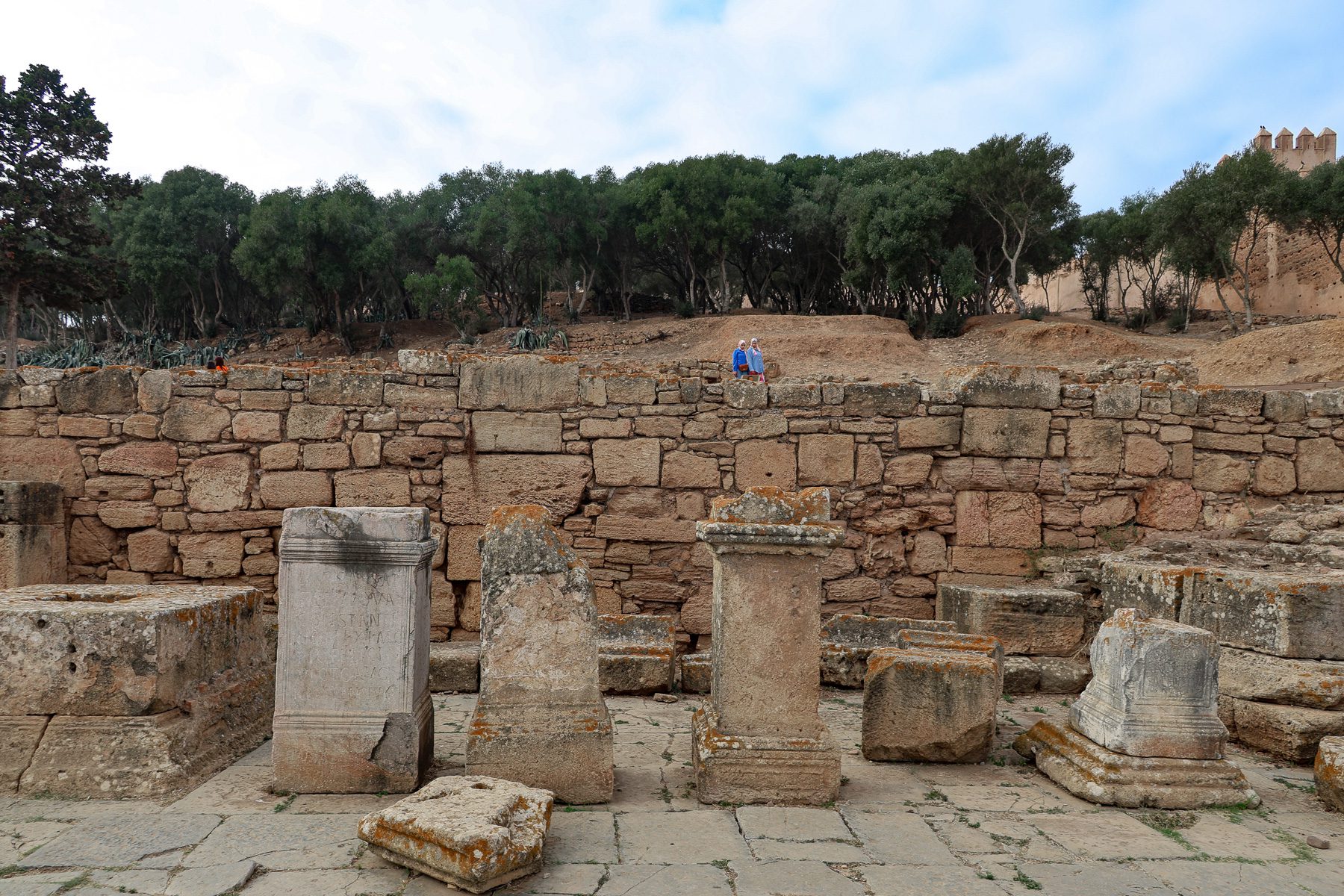
Volubilis is located about 1.5 hours by car from Fez and about 1 hour from Meknes. It is a partly restored French archaeological site where you can glimpse the Roman past of this place.


Initially, it was a Berber (or better said, Amazigh) settlement from around the 3rd century BC. Then, it probably became the capital of the kingdom of Mauretania, and from the 1st century AD, it became a part of the Roman Empire.


It was abandoned by the Romans in the 3rd century AD, left in ruins for some time, and from the 8th to the 11th century, it was the main city of the Idrisid dynasty before the capital was transferred to Fez.


Only in the 19th century was it identified and rediscovered as Volubilis/Walili (the Idrisid name for this city), and some restorations took place. Now it’s a UNESCO heritage site.


You’ll be astonished at the number of preserved or restored areas! The Decumanus Maximus, the main street with approximately 250 shops in ancient Roman times, is a prime example. Other sights include the Triumphal Arch of Caracalla, the temples of Jupiter, Saturn, and Venus, the remains of thermae – public baths – of Gallienus, and the basilica. This city was definitely splendid in the past!


The extensively preserved mosaics are the cherry on top – a must-see for history enthusiasts!


Read more blogs about Morocco!
Hope you liked my blog,
Yours,
Anna xxx